A Collective in Search of an Author: A Conversation with lacasadargilla
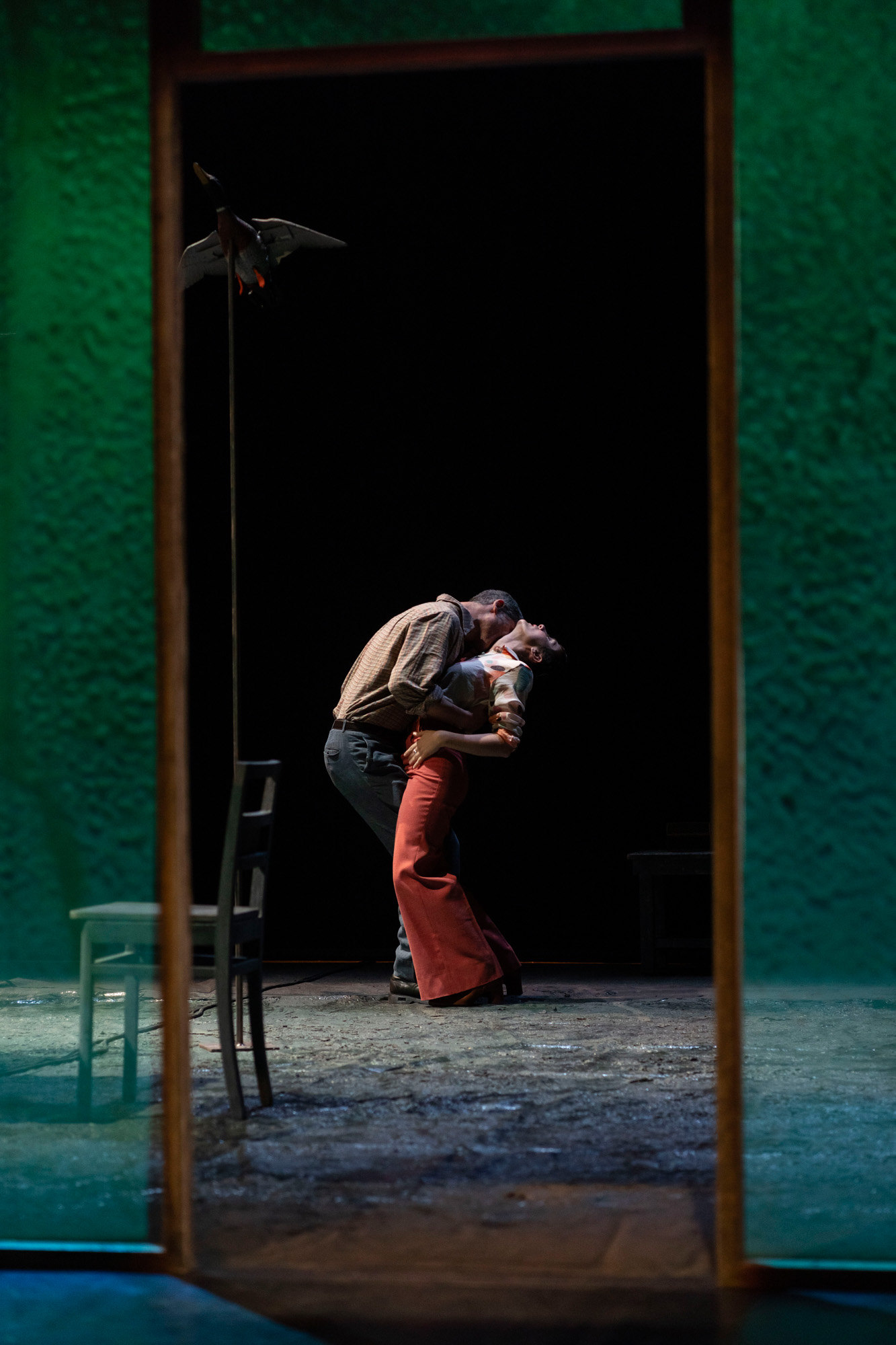
Uccellini (Little Birds)
Part ghost story, part family fable, lacasadargilla’s production of Uccellini emerges from a deep collaboration between company and playwright Rosalinda Conti. In this conversation, the ensemble reflects on discovering Conti’s writing through new Italian playwriting networks, shaping the text through rehearsal and radio, and building a world suspended between memory, grief and the uncanny. The interview offers a rare insight into lacasadargilla’s collective process – one rooted in reading, dialogue and a fascination with the fragile boundary between the living and the dead.
Before we dive into what really captured your interest about Rosalinda Conti’s work, I’d like to retrace with you the steps that led to the staging of Uccellini, in a role that might be a bit unusual for you, as a talent scout for new Italian playwriting…?
Lisa Ferlazzo Natoli Italy is a curious country, where you’re still seen as an up-and-coming playwright, writer, or director even at fifty years old, which is a bit absurd, considering that in terms of age, there’s actually no generational gap between Alice Birch and Rosalinda Conti. The difference really comes down to a different national approach: in the UK, you have institutions like the Royal Court, which bring playwrights together and create an environment where talented young people can develop not just their own themes, but also take on assignments that help them hone their craft for the stage. Here, things are much more complicated: playwrights create scripts intended to be handed to the current director, supposedly in their final form. As for lacasadargilla, our task isn’t so much to evaluate the quality of a script, but rather looking for writing that inspires us and resonates with the company’s ideas.
Alessandro Ferroni It’s not just the four of us in the company—some of our actors, like in Uccellini, Francesco Villano and Emiliano Masala—take on this task too. I’m not sure if that’s the right word… Let’s just say they have a real knack for reading scripts.
LFN We often call ourselves “the readers’ club,” because sometimes our approach is more casual, other times it’s through structured programs – like here, with the European project Fabulamundi Playwriting Europe, developed with Piccolo and PAV – where we read, select, and really put playwrights, from Italy and beyond, to the test, helping their work grow and evolve.
Maddalena Parise Actually, in this case I wouldn’t call us talent scouts, because it’s really the systems set up by Fabulamundi or Piccolo Teatro that open the doors to an extensive network of international theaters and institutions, filtering new works from Italy and Europe. Our role is more about choosing which of these scripts might become the focus of our dedicated attention and care. You mentioned Fabulamundi Playwriting Europe as fertile ground for new Italian and international playwriting, but your connection with Rosalinda Conti actually began a few seasons back, with Abbecedario per il mondo nuovo…
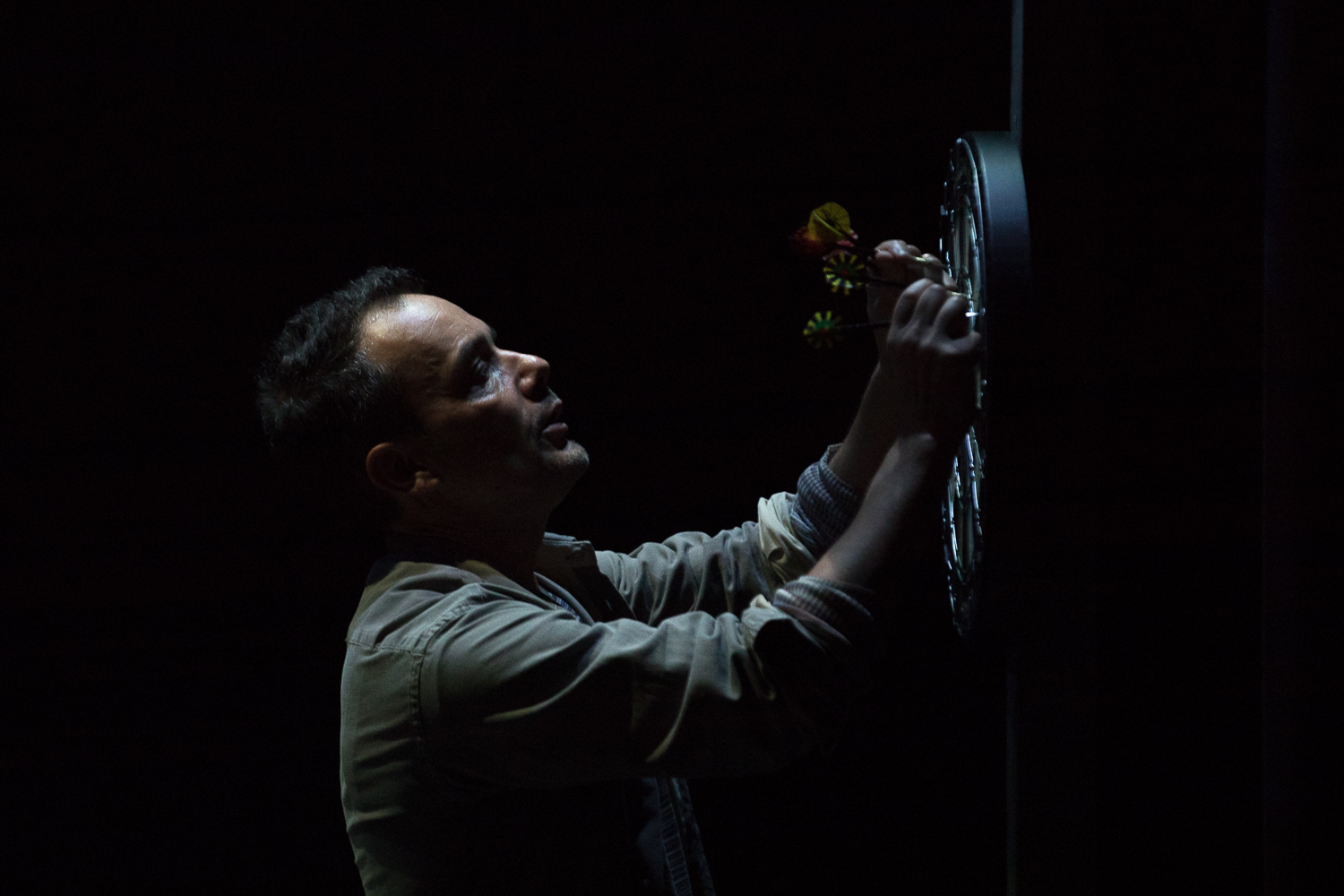
AF The project launched by Claudio Longhi when he arrived at the Piccolo, right in the midst of the pandemic, truly marked a turning point. With Abbecedario per il mondo nuovo, Longhi created a groundbreaking way to connect with the new generation of Italian playwrights under 35, selecting twenty-six from among the winners, finalists, and those highlighted by the Riccione/Pier Vittorio Tondelli Prize and the Hystrio Prize – Scritture di scena Award.
LFN Each of the twenty-six chosen participants would randomly draw a letter from the alphabet, which then became a prompt or spark to write a piece lasting about twenty minutes. This was just enough time to catch the unique “flavour” of a particular writing style, and also to get a sense of an entire generation’s creative voice. With theatres closed, the only way to share these works was to have actors and actresses, under our direction, record them: the end result was twenty-six podcasts, made available to the public on the Piccolo Teatro platforms. Writers from every corner of the country took part in the project – which later became a book published by the Piccolo as part of the series created with Saggiatore – offering a truly engaging look at the landscape of contemporary Italian playwriting.
AF Abbecedario sparked a spirit of connection and mutual exploration, leading us to discover outstanding writers who continue to collaborate with the Piccolo and contribute to the Italian theater world: among them are Pier Lorenzo Pisano, Fabrizio Sinisi, Riccardo Favaro, Fabio Pisano, Greta Cappelletti, Michele Ruol, Tommaso Fermariello and, of course, Rosalinda Conti.
LFN The project’s collaborative nature and the fact that it was born during the pandemic demanded an intense influx of calls, emails, videocalls, sharings. Moving beyond a model of writing in solitude, intended to be submitted as soon as possible to some theatre. There’s a whole new generation that built a mutual relationship, that attends the performances of their peers and takes part in their processes. Not just the podcasts on the theatre’s platforms and the book’s publishing with Saggiatore. The way the Piccolo Theatre “systematizing” the new Italian dramaturgy passes through radio as well, with which your ensemble has always had a love affair.
LFN Certainly, the radio format suits us, I’d say we’re comfortable with it, as it serves as the perfect litmus test, useful to know how a text is able to resonate with people. Thanks to Claudio Longhi and to the Piccolo Theatre, it’s been three seasons since we’ve been collaborating with FUTUROpresente – new writings for the Italian scene, a Radio3 program, curated by Antonio Audino and Laura Palmieri, for which we conceived the radio format of Little Birds, broadcast in June 2022, as well as Nastro2 by Riccardo Favaro; and this brings us back to the discussion of virtuous relationships initiated with Abbecedario…
AF It must be said that this work we do to read and select texts does not always end up with a theatre play: for this reason, Uccellini is an exception. Often the timings of life and theatre don’t always allow us to move forward with every project we imagine. Still, we truly enjoy discovering new writers and building connections among artists who we sense might ‘recognize’ something in each other. We love suggesting plays to directors that we believe they could bring to life in the best way possible; it’s another part of our work that brings us real joy.
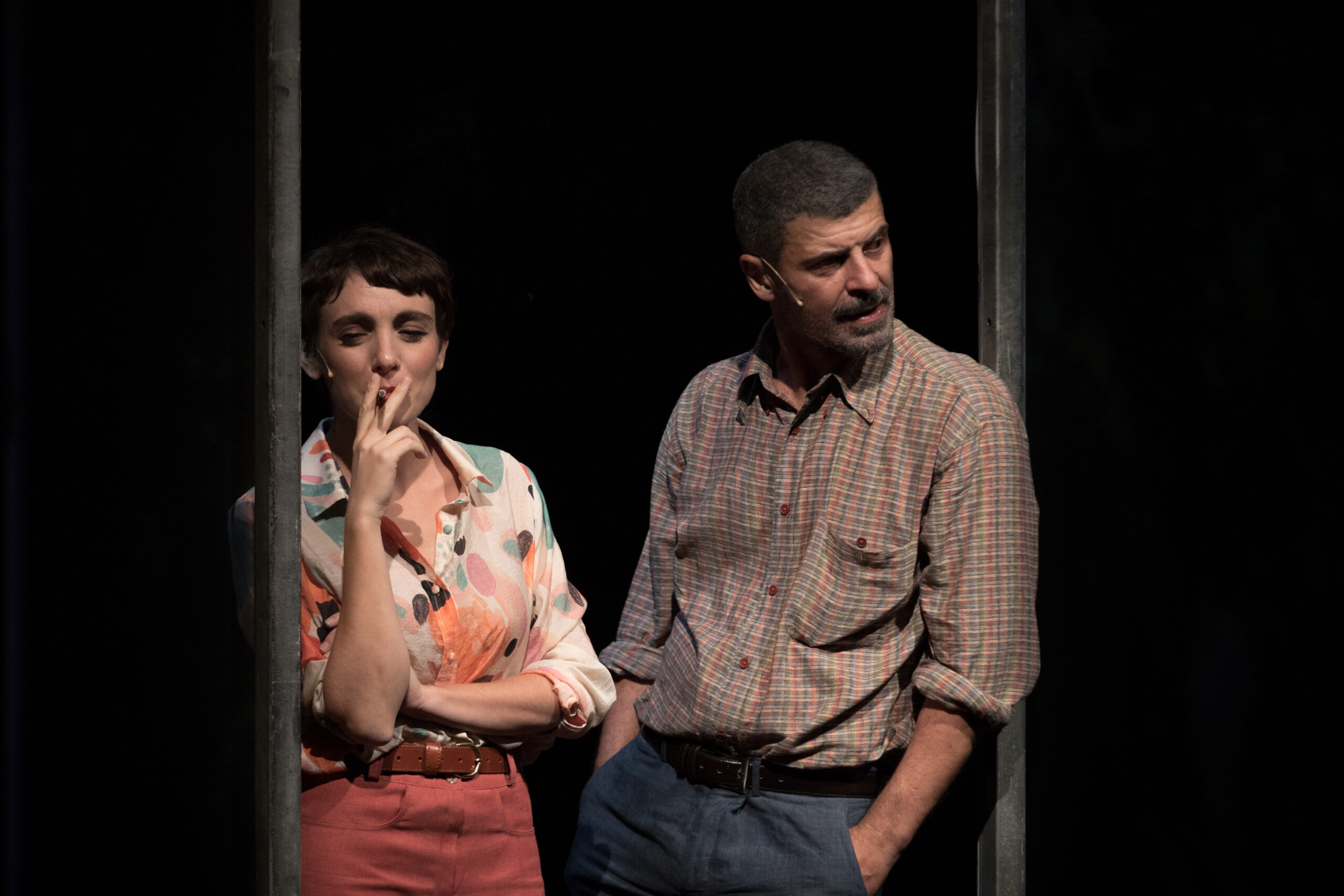
LFN To put it simply, our deep belief in the script means we always start from the writing. Even The Ministry of Solitude grew out of this very approach, even though it was a collaborative piece written by the actors, with Fabrizio Sinisi acting as the architect of the words. With Rosalinda Conti, on the other hand, we began with reading and dissecting the text, which had already been partially revised during its initial testing. At this stage, Emiliano Masala and Francesco Villano’s contributions were essential for Rosalinda.
MP It’s no different from Caryl Churchill’s process, for instance – she usually spends a few weeks with the cast before her play is staged, making adjustments along the way. At the heart of it all is constantly reflecting on what feels like it’s missing.
LFN Here’s a concrete example: Alessandro wasn’t fully satisfied with Rosalinda’s first draft of the story. Even though it was a turning point, it didn’t quite capture all the key elements of the text. We asked her to think more deeply about the setting, the family dynamics, and the connection between the living and the dead. Rosalinda then discovered a few lines from the Grimm Brothers and rewrote them with striking clarity. So, it feels like a Grimm fairy tale, but it’s not – yet it’s become one of the focal points of the show, sort of its own magic lamp.
AF The matter of the character’s ages proved delicate. It was obvious that Rosalinda had written the characters thinking of her own age group. We modified relationships, we hypothesized the character’s jobs, therefore adapting coherently their way of expressing themselves: a university professor would have never used the vocabulary of a thirty-year-old.
LFN Thus, the character of Anna changed deeply, compared to the first draft. The character is beautiful and complex, because she enters the scene as a supporting character – apparently the figure through whom the two brothers manage to communicate – but she evolves into something else. It was necessary to strip away her naivety to deepen her sharpness, her intuition, and her ability to look elsewhere, which allowed her to talk to Matilde, the suicidal sister of the other two protagonists. All this was possible through Petra Valentini’s work: from the radio drama, through the rehearsals, Anna’s character grew not in terms of quantity, so not in the number of lines but it underwent a qualitative refinement which heightened the ambiguity and the distinctive way she influences the story.
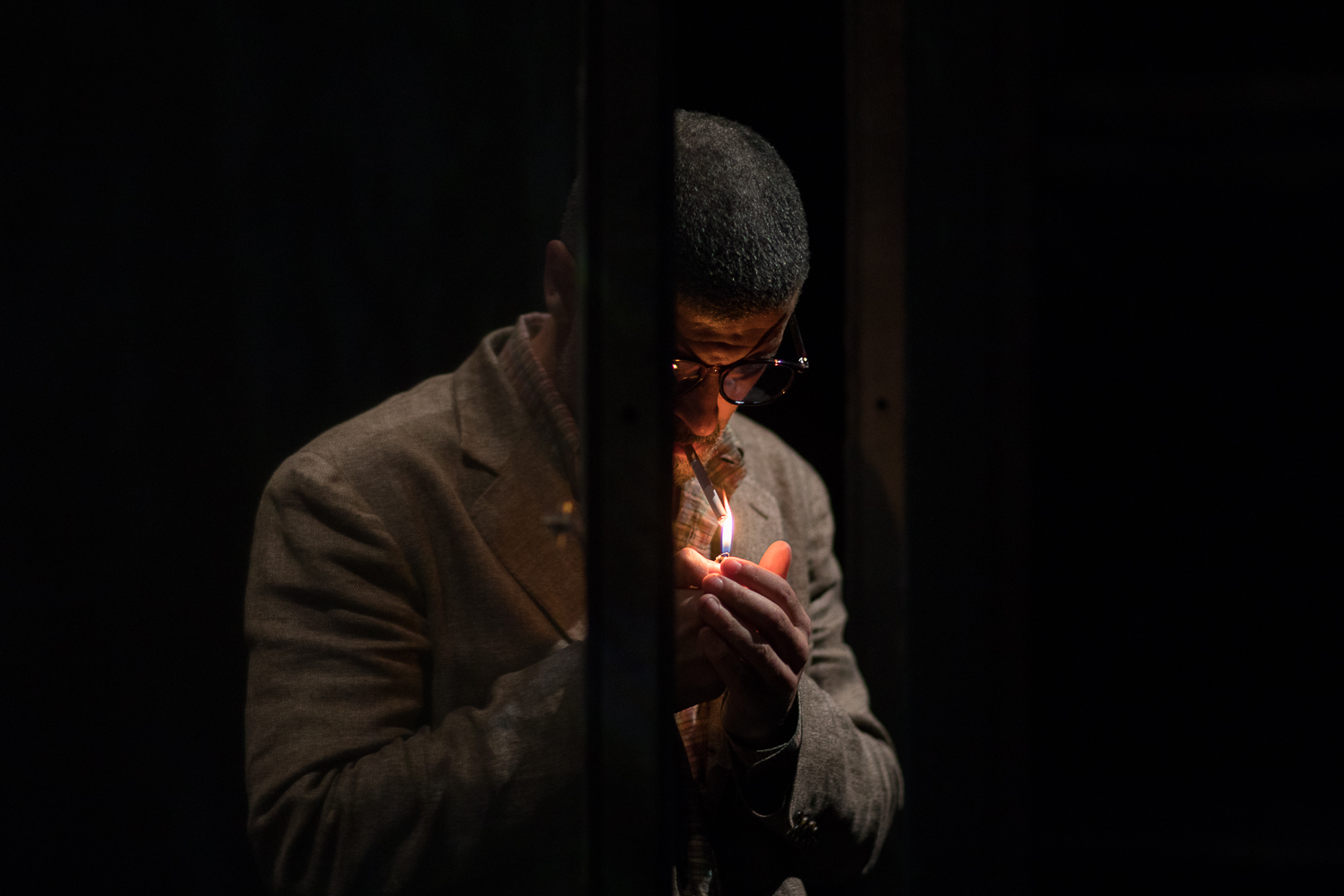
In Uccellini’s central plot, just like Anatomy of a suicide, the theme is suicide intended as an extreme choice made by a woman. Is there a resemblance to Alice Birch’s text?
AF The perspective changes completely. Anatomy of a suicide talks about the scandal of a choice made by someone who acts upon it; in Uccellini we are faced with the scandal of who survives. Maybe that’s also why Theo and Luka’s feelings toward Anna are so intense – almost overwhelming – so much so that, in a kind of emotional transfer, their dead sister Matilde spills out beyond her own boundaries, becoming a mother, a partner, a friend…
The unique setup you developed together with set designer Marco Rossi seems to hint at a possible interpretation: what if all the characters – not just Matilde – were dead, but unaware of it?
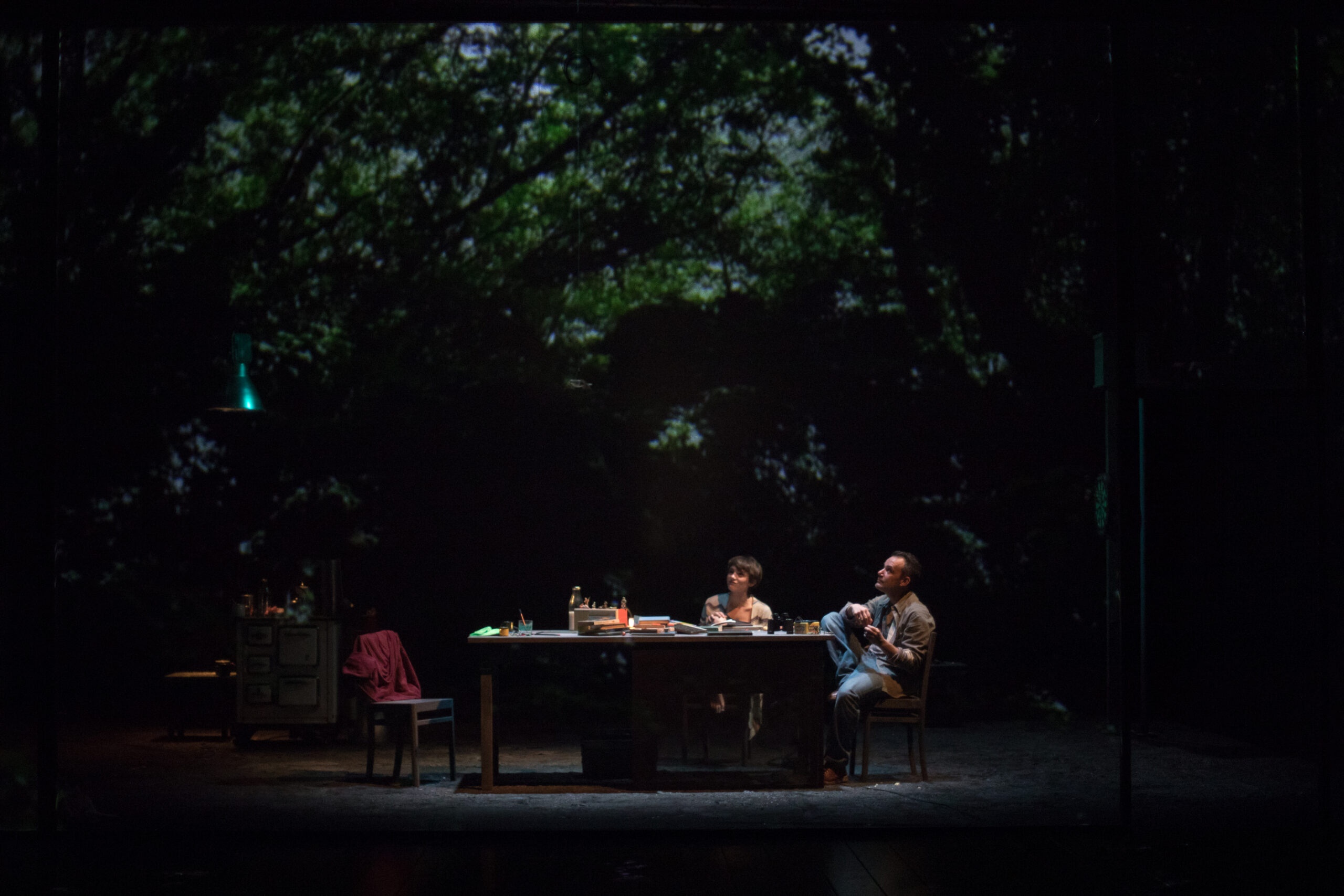
LFN This is a completely valid reading, in line with Maddalena’s work with moving images: the projected effects across the set wall only deepen the suspicion – a very strong one for me – that the house might already be empty, with only nocturnal animals, a bear, and Matilde’s ghost drifting about. It’s a question we enjoy planting in the audience’s mind, and it becomes unavoidable, since the actors inhabit a space that feels anything but realistic. Even the boundaries of the novel Matilde was writing before her death start to blur: are Theo, Luka, and Anna its characters? Are they the final echoes of the past, the last presence, before they can accept that they, too, are dead? The nod to Henry James’s The Turn of the Screw or films like The Others by Alejandro Amenábar is clear.
AF Elliptical, able to “make the leaves tremble,” Rosalinda’s writing is mature and unburdened by the need to overfill the dramatic structure. I’m convinced that if the author were a sixty-year-old man, his work would have been seen as mature, and what might look like gaps would be recognized as thoughtful choices about what should or shouldn’t be said.
LFN It’s actually these omissions, these ellipses, this art of sidestepping, that became one of the most captivating aspects of the text for us.
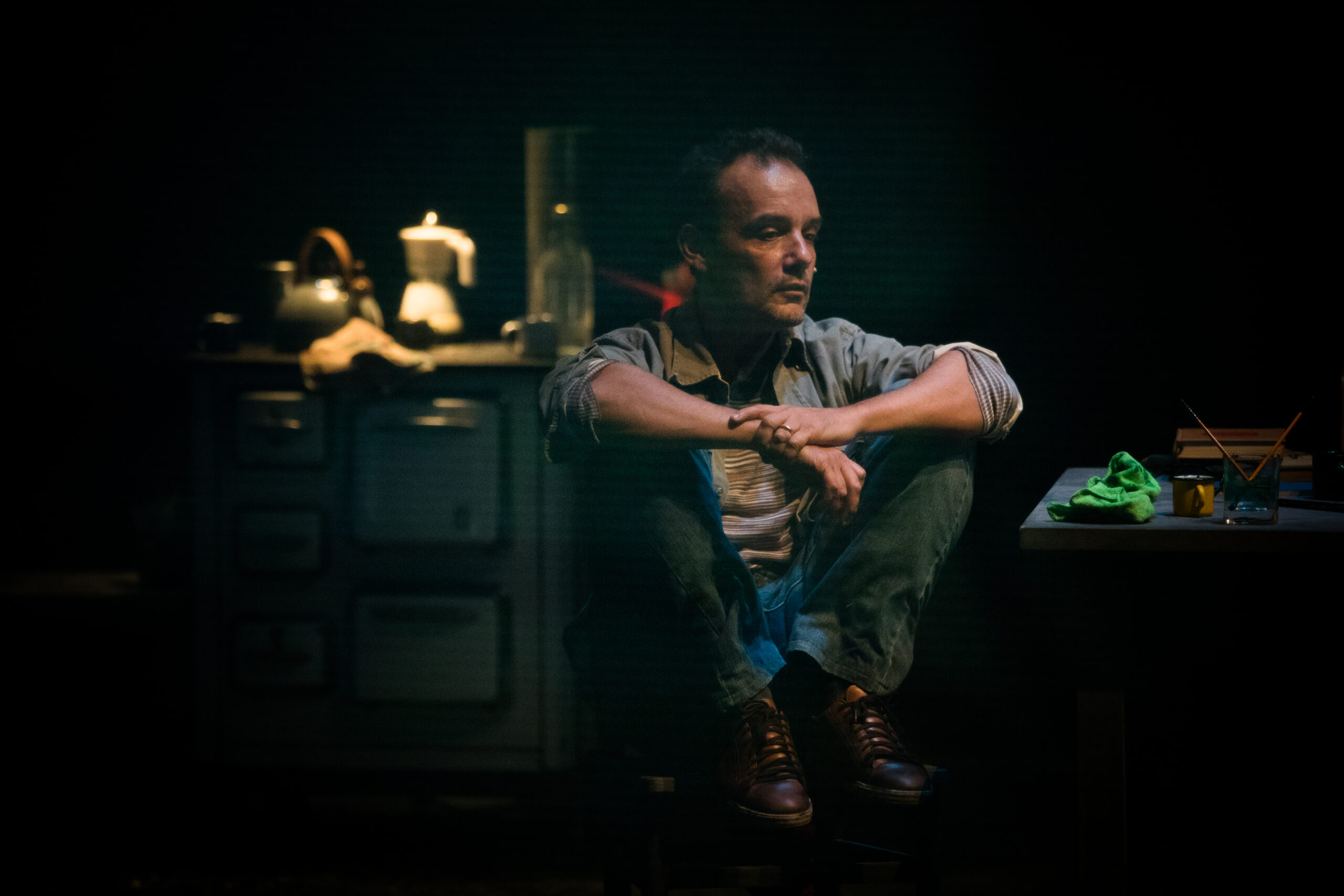
How did the concept for the set come about?
AF It all started with an instant connection with Marco Rossi. We built everything around the idea of ‘appearance’: gradually, different objects emerge – some are classic features of a family’s summer house passed down through generations, others are more unusual finds: old toys, books, toy soldiers, iron mugs, unfinished pieces of furniture, even a birdhouse floating in midair…
MP We realized we shared cherished references, starting with Doris Salcedo, the Colombian visual artist and sculptor. Her work, in some ways, inspired Marco’s table – its asymmetrical shape and the blend of inlays and other elements in its design. The house may be dusty, but beneath that dust, colour peeks through. The show’s colourful visual impact is defined, too, by the costumes designed by Anna Missaglia, and this marks our third collaboration together.
LFN Rosalinda also mentions taxidermied animals, which we replaced with artificial birds, suspended in mid air and surrounded by acoustic signals – creating a kind of sound installation that complements the set design.
Even with an impressive stage setup, at its core, your theatre is still, first and foremost, a space created by and for actors…
LFN Rosalinda Conti’s writing calls for actors who can fully embrace the sweeping, unpredictable journeys of their characters. It’s no coincidence that Francesco and Emiliano, who’ve been part of lacasadargilla since the very beginning, are here. They, too, fell in love with this script, and our job was to plunge them into a kind of enchanted room – one that hums, jingles, and almost clings to them – a living, breathing house that moves with the actors, feeling and reflecting alongside them, until the very walls start to fog up…
MP Anatomy of a Suicide and Uccellini both take place inside a house. But in Anatomy, it’s the outside world that presses in from behind, breaking through the back wall; while in Uccellini, it’s the opposite – a transparent, almost ghostly surface stands between the audience and the action. Alessandro’s idea was to use a screen to project images through the inner space, making the actors just barely visible and creating a sense of ambiguity am I, as a viewer, watching these images flicker across an almost invisible surface, or are the house’s inhabitants seeing them?
AF The set in Anatomy is home to characters who are undeniably real – Birch’s script grounds them in reality. For Uccellini, it’s different: we glimpse bodies through the glass, but can’t be sure they’re really there. Maybe it’s all just a creation of Matilde’s mind and writing – she’s the absent protagonist, after all.
Are there any books, literary references – or others – that influenced your staging?
MP Definitely Marguerite Duras. The way she writes about houses and the relationships of the women that inhabit them and live in them, a relationship that always includes a comparison between the inside and the outside, makes sense since Duras has always lived between her own soul and houses with gardens.
LFN I also find a lot of themes and tones with the Norwegian Jon Fosse. I’d say that, to us, Rosalinda is like many playwrights a failed novelist in a good way, a definition that applies to Ibsen as well. Isola, the text that she had written for Abbecedario, was a long story…
Indeed, I was struck by your statement, in the interview given for Anatomy of a suicide in which you talked about Rosalina Conti as an author capable of writing excellent dialogues: the experience for Abbecedario on the other hand was going in the opposite direction…
LFN We found out that she can do both. We think of the stage directions for Uccellini, which play a fundamental part of the play. lacasadargilla’s choice was to not only preserve them, but to actually give them a structural voice in the play.
MP Some of them are not even stage directions, but something else: expression of a taste for catalogues and for taxonomic lists, other elements we deeply love, and which in this text are a key to making things visible to the characters themselves…
LFN This is a play with recurring themes, built around a clear leitmotif. Its writing rings with something different, echoing something else and speaks to our fascination with inescapable places – the kind you can’t leave, but wish you could tear down; places where, between the living and the dead, you find a spark to begin again.
Edited by Eleonora Vasta