Bertolt Brecht:The Water-Fire Person
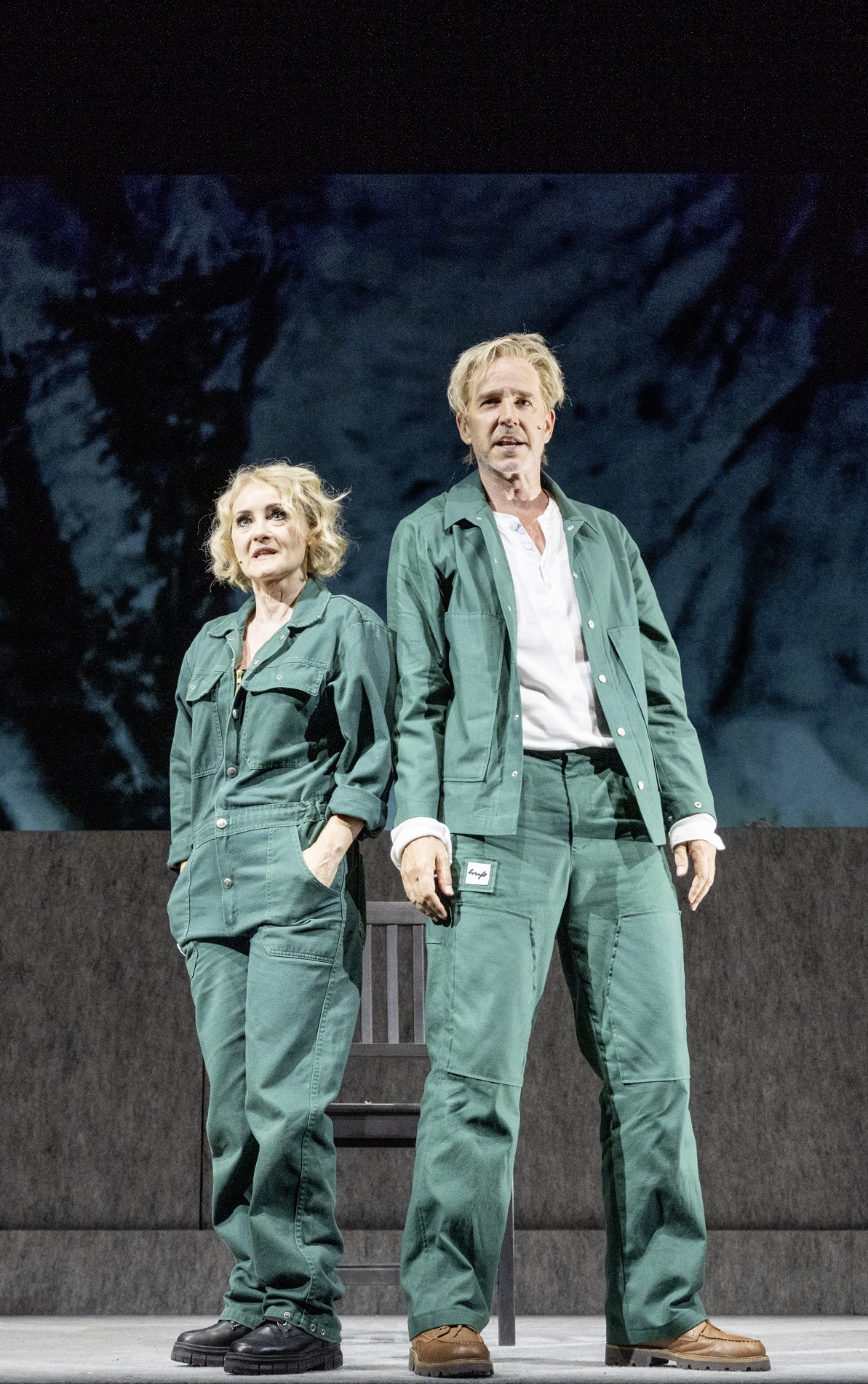
Berliner Ensemble: Stranger than the Moon
A conversation with musicologist Albrecht Dümling
Songs are central to almost all of Brecht’s major plays, and many of his poems became popular thanks to their musical setting. What was Brecht’s relationship to music?
Brecht received piano and violin lessons at an early age. He played the guitar passably and lightly studied counterpoint and harmony. At the symphony concerts in his hometown of Augsburg, he watched the conductors particularly closely. At times he imitated them. He bought himself a baton, a music stand and the score to Wagner’s Tristan and Isolde. Brecht’s early musical experiences conjured up dreams and mental images, all of which he wanted to put on paper as a poet or as a music critic. In fact, he wrote reviews for a daily newspaper in Augsburg. He disliked the preference given to opera over spoken theatre. As a young poet he loved music but also feared it at the same time. He even increasingly viewed it as dangerous.
What was he scared of?
Going to concerts could trigger extremely intoxicating experiences for him. Bach’s St Matthew Passion, for example, caused his heart to palpitate so much that he feared for his health. Brecht drew conclusions about others based on himself. He assumed that the majority of concert audiences used music like a drug. Most of all, Brecht considered Richard Wagner a seducer and creator of intoxicating experiences. However, his warning “Don’t let yourself be seduced” also refers to the church’s promise of life after death.
How did Brecht respond to these temptations?
“Don’t stare so romantically” was his motto. The stage designer Caspar Neher once portrayed his trusted friend Brecht as a “water-fire person”, a figure who vacillated between emotion and hardness. Brecht evidently found this portrait to be valid and adopted it in Hauspostille.
The strong emotional fire that burned within him and which he considered dangerous had to be extinguished by reason. Since the drug-like effect of music was based on the elimination of reality, he contrasted so-called “absolute music” with musical forms that were connected to people’s lives and actions, to their everyday lives.
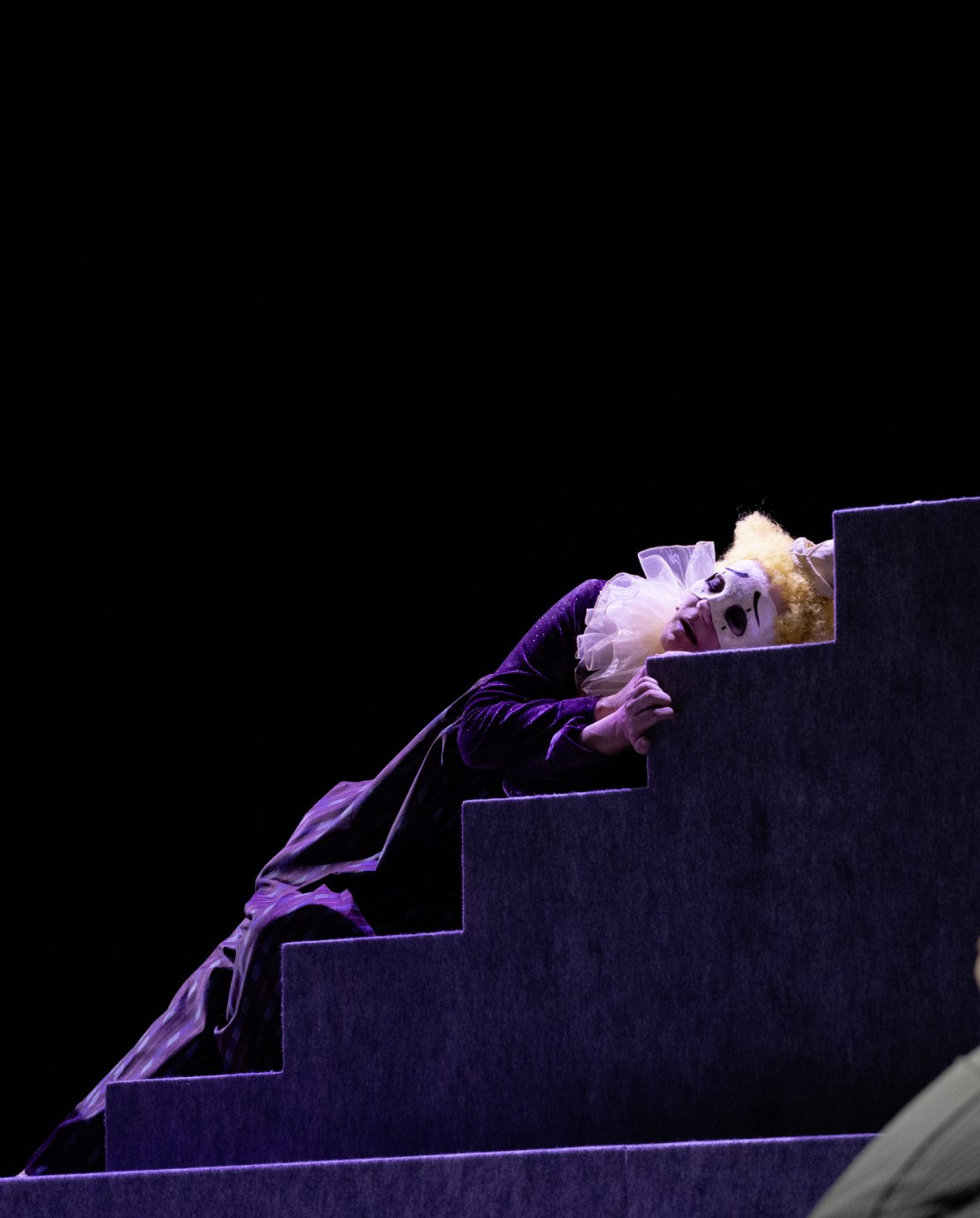
So music is not just for enjoyment, it is always connected to a purpose. Very early on at the Augsburg folk festivals, he discovered the figure of the ballad singer, this also he found in his role model Frank Wedekind. How did this impact his work?
These experiences were of the greatest importance to Brecht. For the ballad singers, music had a subservient role; it was meant to convey the texts. Ballad singing was also a culture based on oral tradition. There were neither books nor music stands at the fair. People made music and sang from memory and for a specific occasion.
Many of Brecht’s texts were created while speaking aloud, while fantasising freely. They were transcripts from speech. Consistently, Brecht also published his Lesebuch für Städtebewohner (Handbook for City Dwellers) as a record of speech. Like the ballad singers and Wedekind, he preferred simple, easily memorable melodies. They provided a rhythm. With a melody in mind, a poem was easier to learn by heart. It also fixed a certain way of speaking. Brecht therefore published his most important poems in his Hauspostille also with the melodies. Later on, he also combined poems with melodic ideas. His composers benefited from this.
The majority of the songs we used were written by Hanns Eisler. What was special about the Brecht/Eisler collaboration compared to other composers who wrote for him?
The first professional composer with whom Brecht worked was Franz Servatius Bruinier, who died young. His successor was Kurt Weill, who was enthusiastic about the songs of the Hauspostille. This resulted in the opera Rise and Fall of the City of Mahagonny. When Weill insisted on the leading role of music, a dispute arose. Hanns Eisler, a student of Schönberg, was unfamiliar with such demands and conflicts. Despite his success with avant-garde compositions, he distanced himself from the bourgeois music business. He sought contact with a broad audience and wanted to use music to support the left-wing workers’ movement. Brecht had similar interests. Politically and aesthetically, there was a great deal of agreement between him and Eisler. They spent most of their years of exile together, first in Denmark, then in California. Their collaboration was a truly productive exchange, with creative impulses often coming from Eisler. Brecht’s only real theatrical success in the USA, the Galileo performance of 1947, emerged from his cooperation with Eisler.
Did his encounter with Eisler change Brecht’s relationship to music over the course of his life?
Eisler was even able to persuade his friend Brecht to listen to music by Beethoven and Schönberg. The playwright did not become an avid concert-goer. However, the polarity of feeling and reason, of fire and water, increasingly came into balance. This is evident not least from the children’s anthem with which both creators cast a hopeful view of Germany’s future after the war: “Grace spares neither effort / passion nor reason / that a good Germany may flourish / like another good country”. The song begins with a word that Brecht had probably never used before: grace. This term from German classicism belongs to an ideal of humanity to which Eisler was the first to give him access. For me, Children’s Hymn is the most beautiful result of the collaboration between the two friends.
This interview was conducted by Lucien Strauch