Bertolt Brecht:To Sing a Life
Berliner Ensemble: Stranger Than The Moon
By Lucien Strauch, dramaturg of Stranger than the Moon
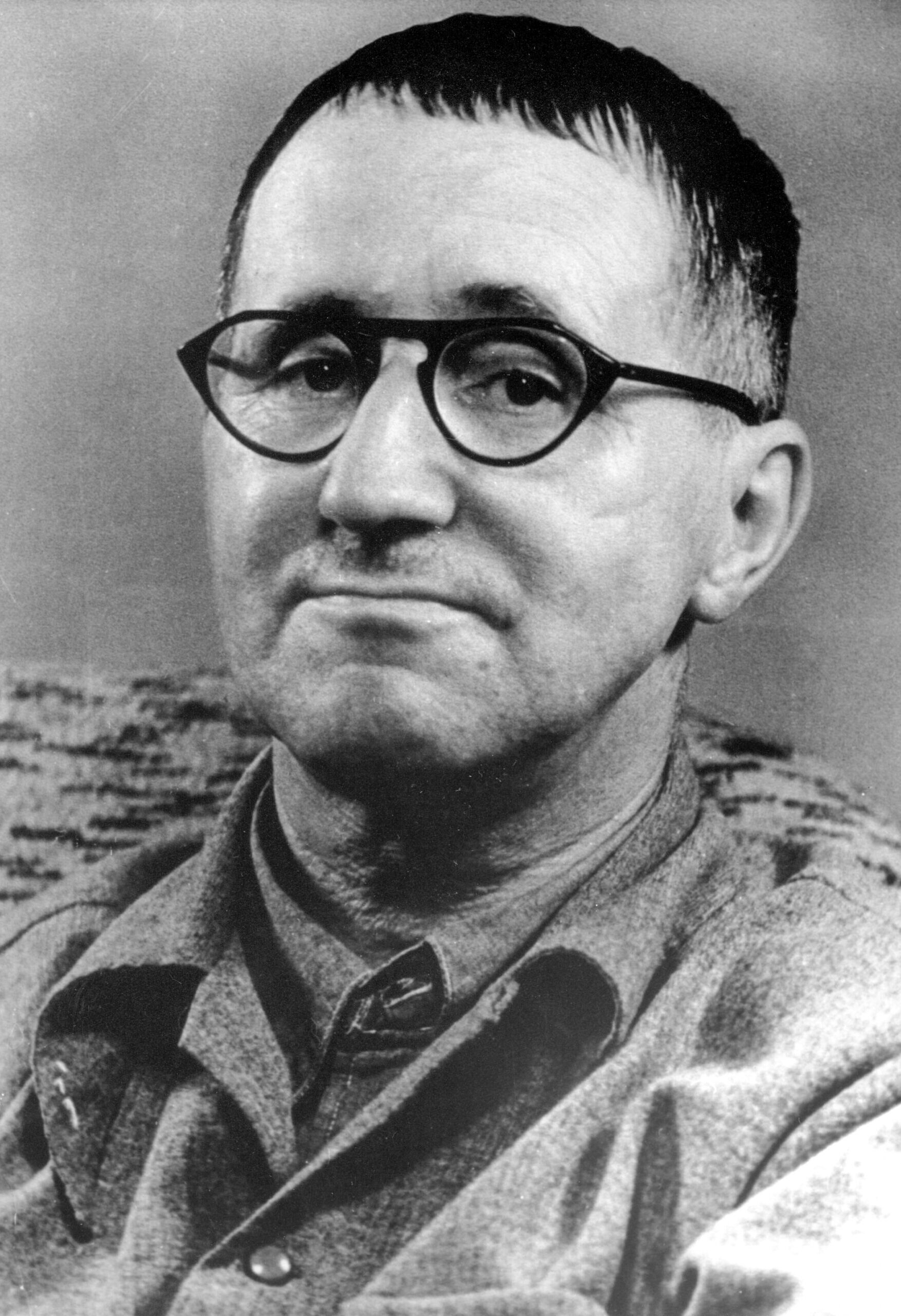
What was he like? Where can he be found in his work? “Everywhere! In every verse, in every sentence”, wrote Ruth Berlau in 1958, two years after Bertolt Brecht’s death. Brecht himself had ambivalent views on the question of how the artist and his work intertwine. On the one hand, he is known as a master of self-dramatisation: combining ragged smocks with fine silk shirts to create an artist’s look, cultivating an olfactory signature by not washing himself, and never giving up his Augsburg accent, even after a decade and a half of involuntary stays abroad. He knew his effect and cleverly designed the “Brecht” brand. On the other hand, he is also known as the tireless creator: always concerned with the ‘third thing’ and, in exile, pragmatically noted: “The fact that these notes contain so little private information is not only because I am myself not particularly interested in private matters (and hardly have a method of representation that satisfies me) but primarily because in the first place, I expect that my notes would have to exceed limits of incalculable number and quality.”
From his life, full of both rich success and austerity, Brecht draws two of his alter egos, interpreted by Katharine Mehrling and Paul Herwig in Stranger than the Moon. A fragmented collage of songs, poems, autobiographical notes and letters, which are structured more according to thematic context than to historical chronology, show us B.B. in three phases of his life:
Initially – the first act – here is the young Brecht in Augsburg, Munich and Berlin in the years between the wars. Driven by an unconditional urge to create, he seeks his place as a poet and singer. His own radical-nihilistic worldview must first be outsourced to the dramatic figure of Baal; he himself is still “too soft”. He has his first successes with pieces such as Drums in the Night and the poetry collection Hauspostille and finally becomes an overnight star with The Threepenny Opera. But his fame is soon overshadowed by Hitler’s rise to power. One day after the Reichstag fire, Brecht leaves Berlin.
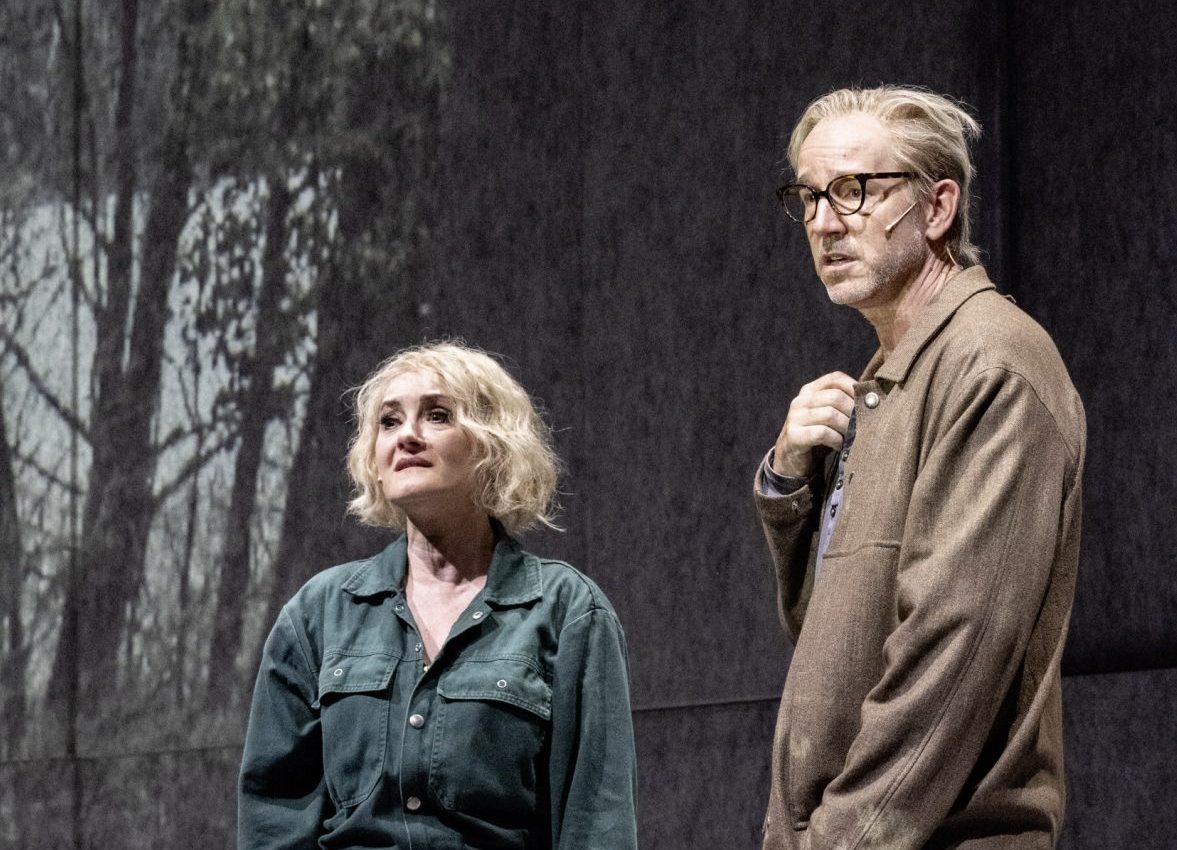
Here begins the second act – a long period of exile in Denmark, Sweden, Finland and finally California. He comments sharp-tongued on the devastation of the World War from a distance. In the middle of his life he is particularly productive, but dramatic masterpieces such as Life of Galileo, Mother Courage, Arturo Ui and The Caucasian Chalk Circle are all initially shelved. There is no stage to play them.
The third act – after the end of the war he leaves the USA and returns to the now divided Germany in 1948/49 after a short stopover in Switzerland. He settles in East Berlin and Buckow and starts the Berliner Ensemble with Helene Weigel. After a period of unpopular residency at the Deutsches Theater, the company moves into the Theater am Schiffbauerdamm in 1954. Now things can get going for the revolutionary-playwright Brecht, death is knocking on the door.
He suffered from a lifelong heart condition and was unable to travel to the London performance of Mother Courage. He died at just 58 years of age, however perhaps reconciled: “For some time / I had no fear of death. Because nothing / can ever be lacking for me, provided / I myself am missing. Now / I managed to be happy / all the blackbirds sing for me too,” he wrote in May 1956, just three months before his death.
That blackbird song – the song of the “folk singer in the age of skyscrapers” arranged by Adam Benzwi especially for this project – is the connecting element of the evening. It tells of stories in themselves and yet always also something about its author.