One book, one film, one dance piece
Neon Dance: Last and First Men
By Adrienne Hart, founder of Neon Dance
Last and First Men is a story about humanity – who we are, where we’ve come from, and what might be left of us far into the future. It looks at civilisation from a distance and asks what survives when time, climate, and history have done their work.
But it’s more than just a story. It feels strangely relevant right now, with questions about responsibility, legacy, and how we treat the planet quietly running through it.
First though – and don’t worry, I’ll be brief – to understand Last and First Men, you need to understand its timeline. This work exists because of a relay of ideas passed between some pretty extraordinary minds.
It started with Olaf Stapledon, a philosopher and sci-fi writer, who published the novel Last and First Men in 1930. It’s not sci-fi as we know it now – no heroes, no villains – more a vast thought experiment about humanity over billions of years. Strange, beautiful, and surprisingly tender.
Decades later, Icelandic composer Jóhann Jóhannsson became fascinated by the book. He created a powerful orchestral score inspired by it, which eventually evolved into a film – also called Last and First Men. Jóhannsson wasn’t just a composer; he was a storyteller and filmmaker, with a remarkable ability to pull in collaborators. He invited Tilda Swinton to narrate the film, and she said yes – lending her voice to the future of humanity with incredible restraint and gravity.
Tragically, Jóhannsson died before the film was completed. His close collaborator, Yair Elazar Glotman, finished the score with immense care, staying true to his vision. That sense of devotion and continuity is something I feel deeply connected to in this work.
The music is what first pulled me in. It’s sci-fi without spectacle – expansive, atmospheric, and deeply emotional. The kind of sound that gives you space to think. I could see bodies inside it immediately.
There’s a wealth of extraordinary films that could be set to dance, but I chose Last and First Men because it doesn’t spell everything out. It leaves gaps. And dance lives beautifully in those gaps. Movement can respond to feeling rather than plot – to scale, fragility, and time passing.
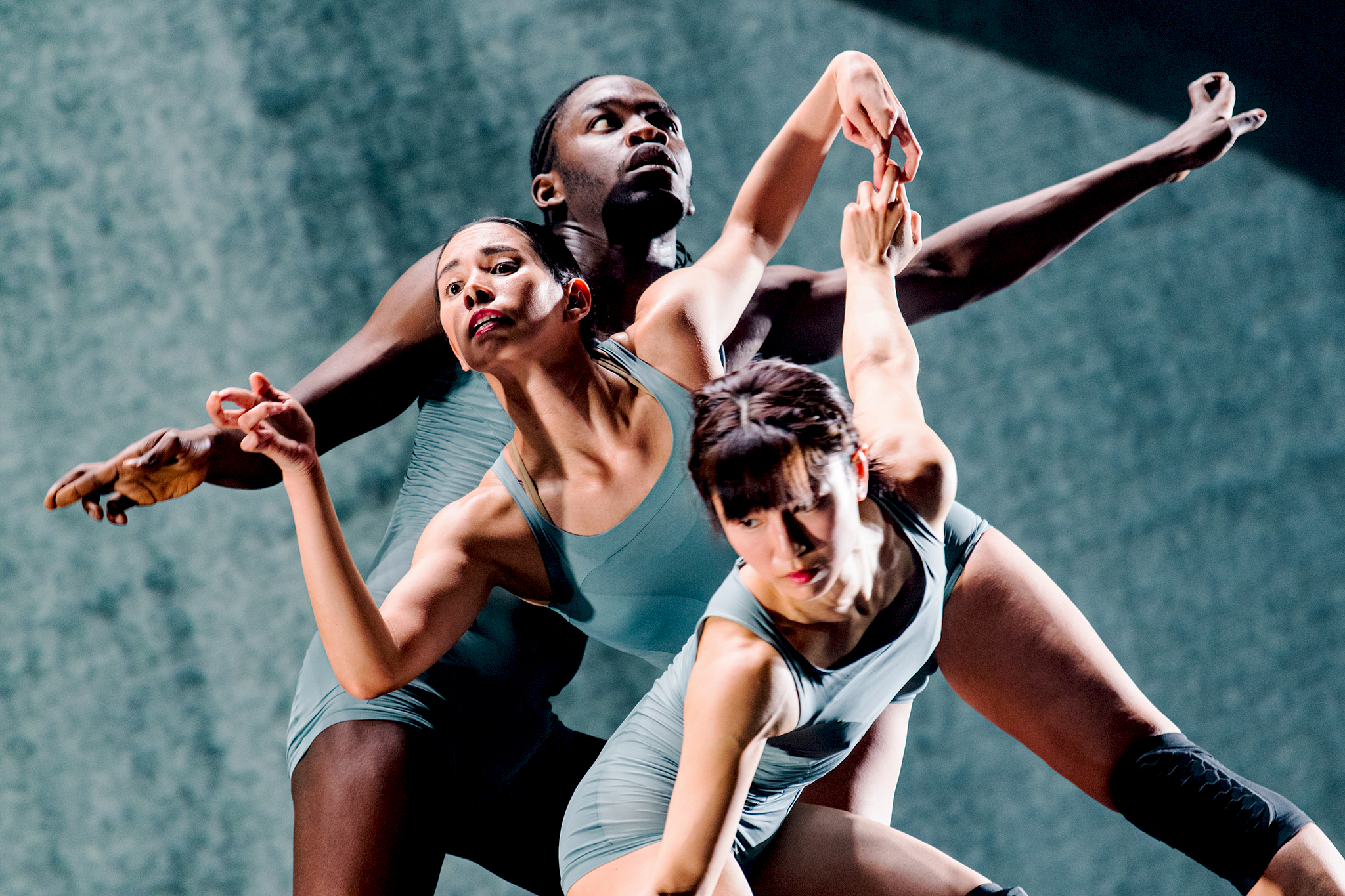
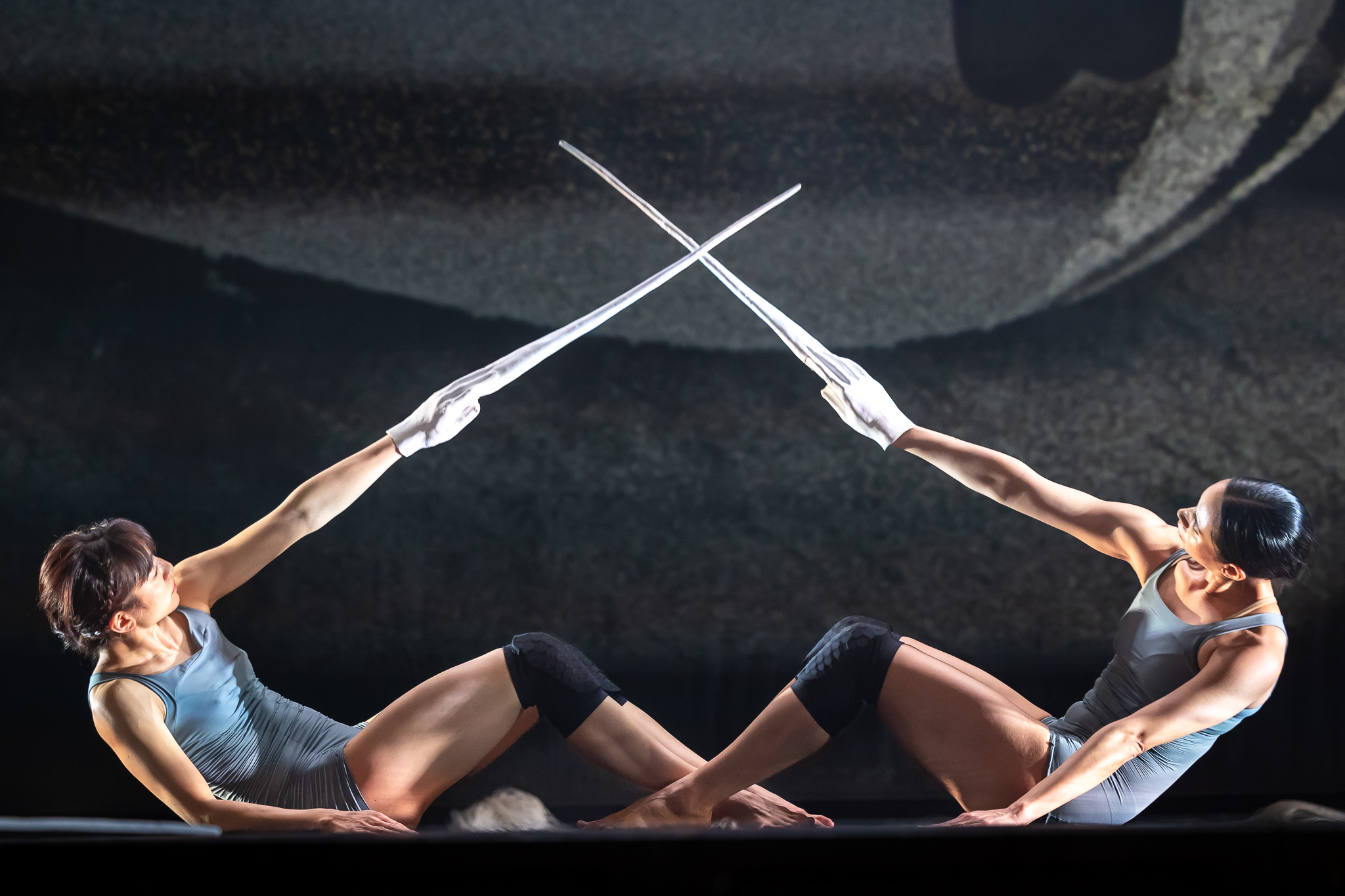
This piece would not exist without the extraordinary commitment of the team around me, especially the three dancers – Fukiko Takase, Kelvin Kilonzo, Aoi Nakamura – who have embodied this work with such care and intelligence at every performance since its creation. They carry the piece, night after night, and it changes each time, because of them.
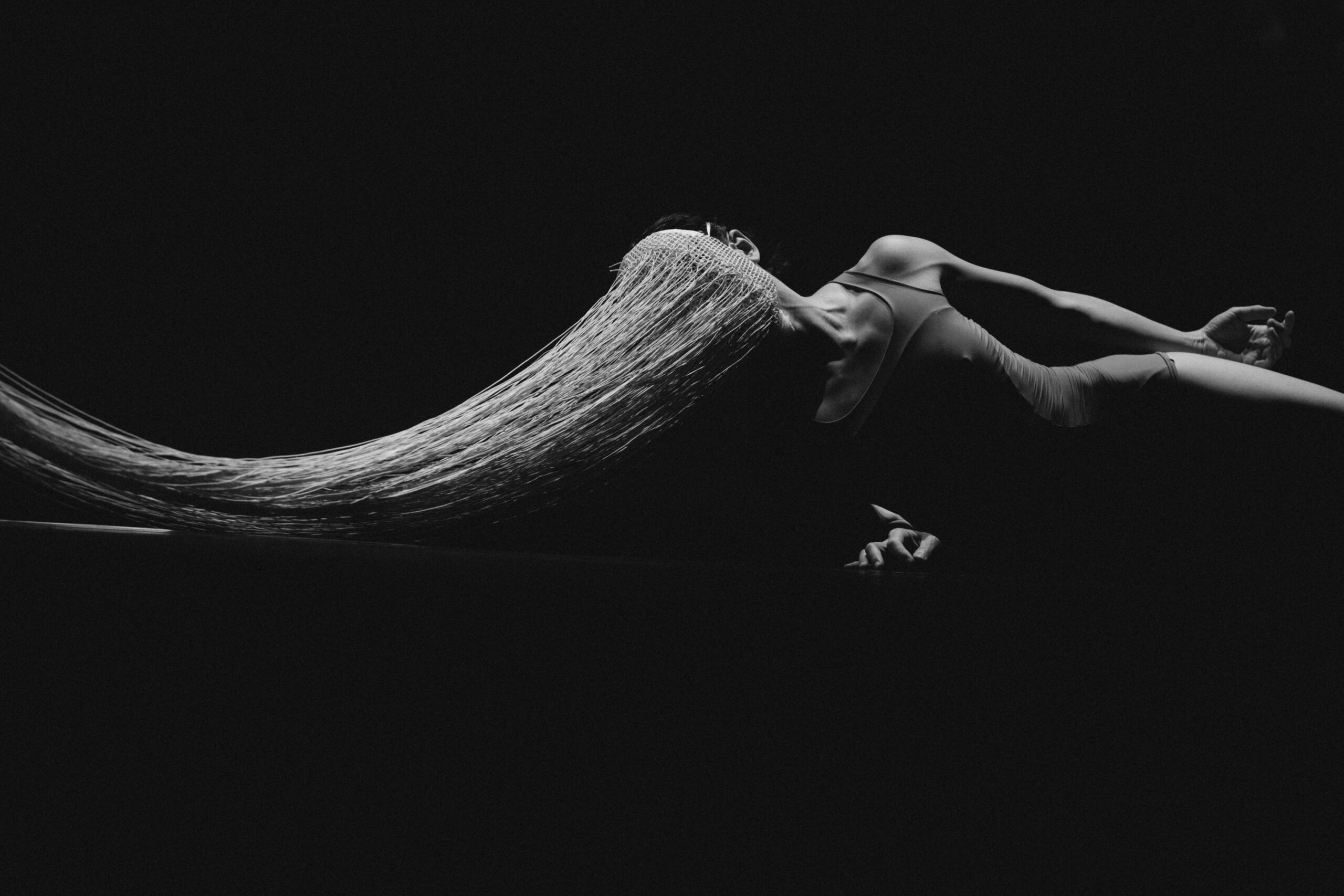
And then there’s the costumes! The sculptural, wearable designs by Ana Rajcevic (with contributions from Mikio Sakabe) aren’t just outfits – they become extensions of the dancers’ bodies. Offering new possibilities for movement, they shaped sections of the work in a whole new way and play a key role in the physical language of the piece.
What do I hope audiences feel? Not that they “understand” something new from the work, but that something lingers. A sense of perspective. Maybe beauty. Maybe discomfort. Something that stays with you on the Tube home.
And if you’re someone who thinks dance isn’t really for you – this is exactly the work I’d point you to. So often I hear: “My friend got me a ticket… I’d never have thought to come – but I’m so glad I did.” You don’t need any prior knowledge. Just curiosity.
Why this work, why now? Because in just 60 minutes, Last and First Men offers something quietly enriching. When you leave, I hope you carry a little of the future with you – or at least a moment that makes you pause. That’s enough for me.