Push and Pull: An Introduction
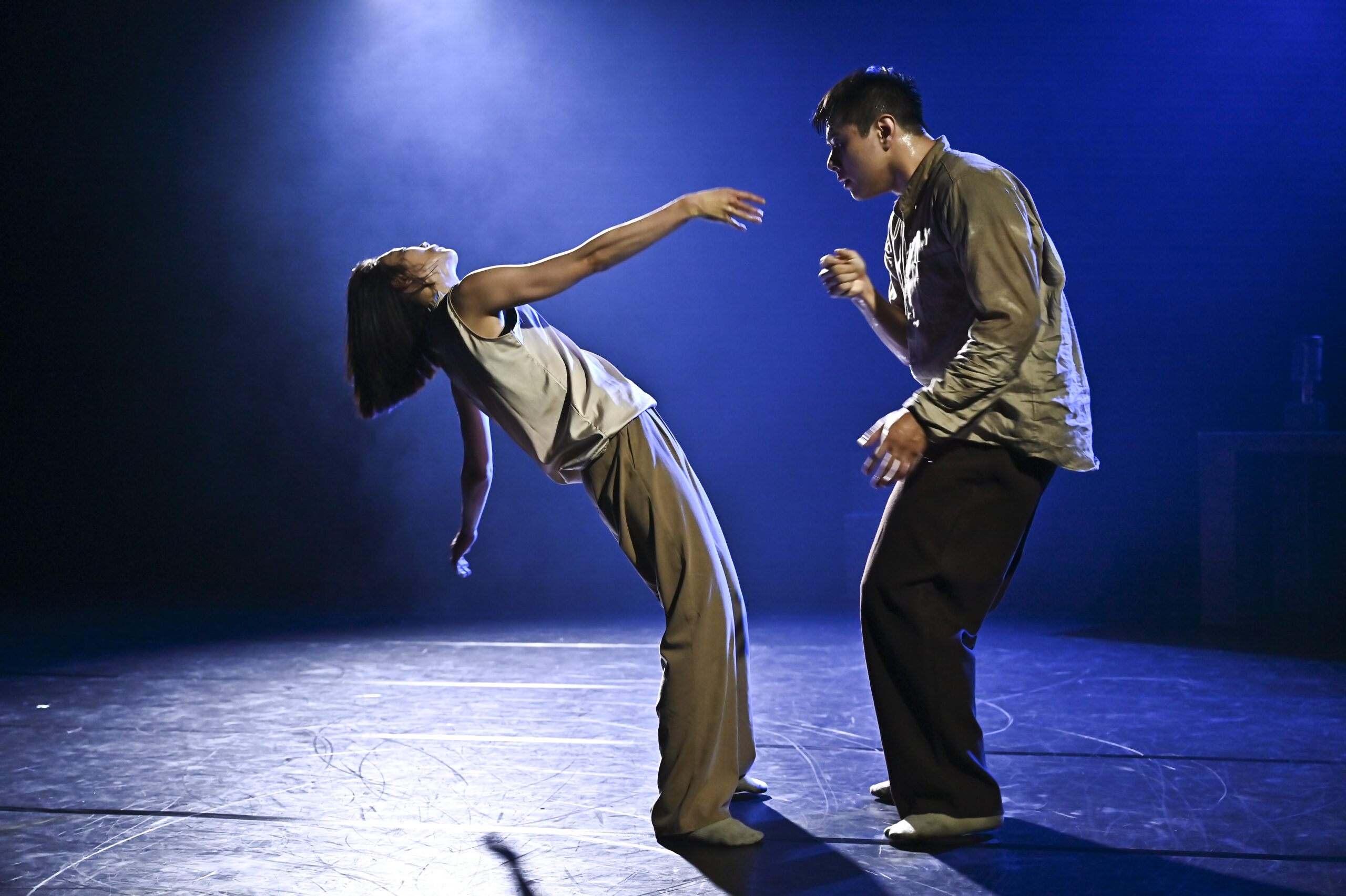
Hung Dance: Push AND Pull
Push and Pull is inspired from a simple and ambiguous daily scenario: a door marked “PUSH” or “PULL.” Though clearly labeled, people often hesitate, misjudge, or obey the other side. This moment of uncertainty reflects the negotiation and tension rooted in human relationships, and mirrors Taiwan’s position in navigating between assertion and diplomacy: within family, society, and its international position.
This duet begins with mundane details, expanding into emotional structures and geopolitical metaphors. Choreographer Lai Hung-chung begins from a memory of his mother, a silent yet resilient woman who carried the family’s emotional and practical weight. As Taiwanese society evolves, he began to ask: are the energy structures within our relationships also quietly shifting and reorganizing?
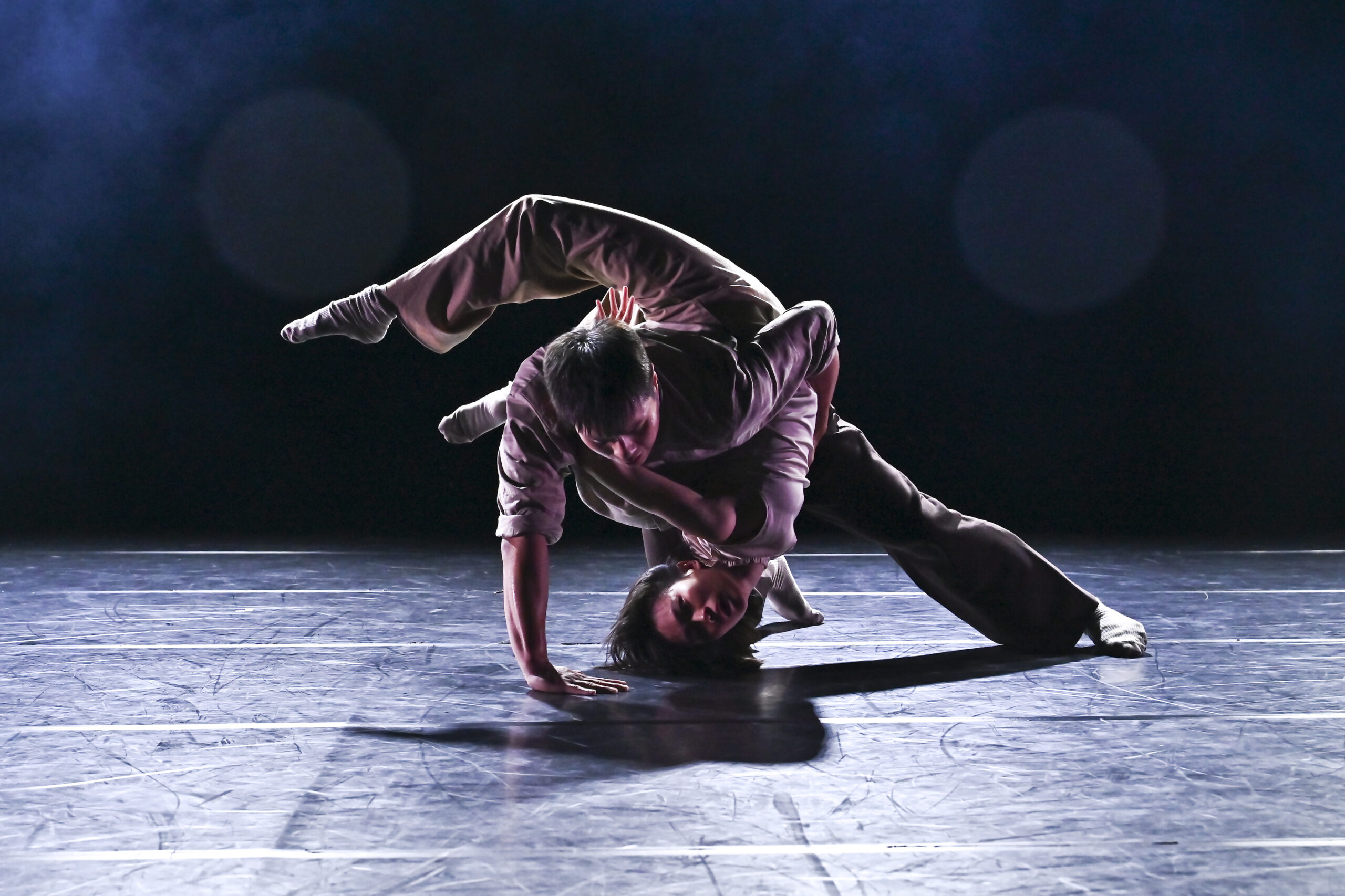
The only stage props are two modular tables and two chairs. Initially as a sealed rectangular block, the structure is gradually dismantled and reconstructed through the dancers’ movements. At its centre, a transparent water-filled lamp trembles with each shift, reflecting emotional tremors and invisible pressures. The sound design is built from breath and water: chairs open on inhalation, close on exhalation. When the scene calls for the sound of a heartbeat, the audience instead hears falling rain. This auditory-visual dislocation evokes a poetic space of memory, emotional build up, and release.
In the final scene, the female dancer takes initiative, pulling the male dancer forward as they reconstruct the space together. She is no longer a passive receiver of emotion, but an active force. Instead of a climax of conflict, the female dancer consciously chooses to give in, in order to move on.
Push and Pull is a quiet fable about Taiwan’s psychological landscape. Situated on a tectonic fault line, the island is in a constant search for balance. Taiwanese people are known for their kindness and resilience, yet we often choose not to “misstep” amidst instability: observing, holding, waiting. This psychological mechanism shapes how we manage intimacy, tension, and identity, subtly influencing how we move, choose, and relate.
Push and Pull – sometimes, yielding is a form of moving forward.
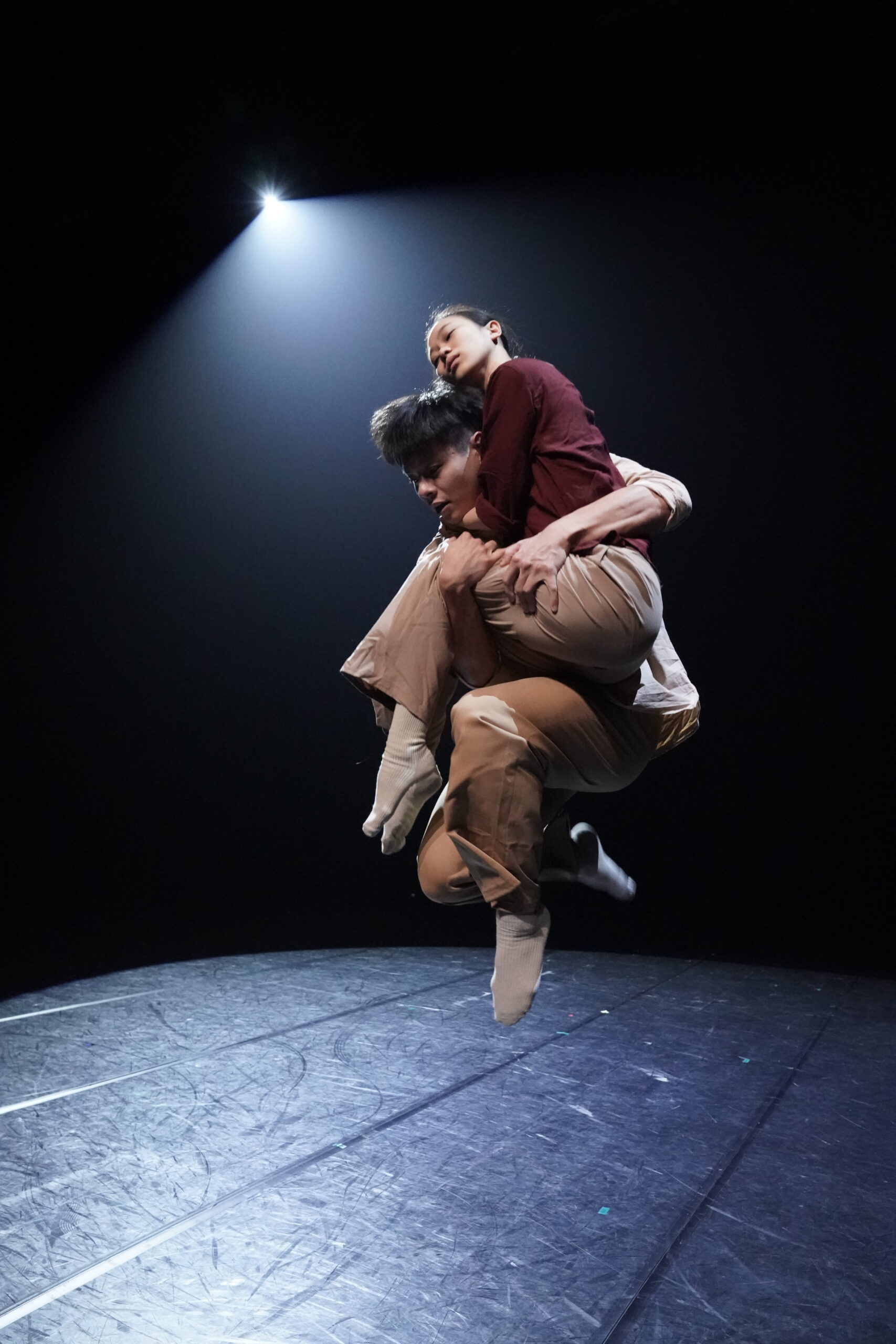
Choreographic imagery & Symbolic Structures
A poetic breakdown of four key elements: movement texture, emotional space, spatial language, and gender roles.
The rhythm of a seismic island
Taiwan’s location on tectonic boundaries forms the work’s dance language of balance. Dancers push and pull, misaligning and realigning bodies and objects, mirroring how people seek footing amid social and emotional tremors. Movements shift between instinct and composure, much like our responses to an earthquake. As the piece evolves, opposition gives way to a gliding, skating-like quality, becoming a signature of the choreography.
Breath and Water as Nonverbal Language
Breath and water form the core of the soundscape. Chairs open with inhalation, close with exhalation. Water flows, drips, and evaporates – echoing emotional release and social tension.The water-filled lamp onstage acts as an emotional seismograph, reacting visibly to shifts in energy and space.
Rebuilding the Set, Rewriting the Roles
The set consists solely of two tables and two chairs. Dancers push, pull, dismantle, and rebuild them, symbolizing ongoing negotiation in relationships. Each shift asks: Who lets go? Who leads? Who follows? In the final section, the female dancer initiates change, guiding the male dancer and reshaping space. Her movement is not control, but agency. At this point, the water lamp shakes most violently – as if space, emotion, and memory all resonate together.
Yielding as Forward Motion
The piece ends not in conflict, but in yielding. This is not defeat, but a conscious choice to hold balance, step back, and observe. For Lai Hung-chung, this reflects Taiwan’s cultural instinct: kind, resilient, and cautious in the face of uncertainty – choosing peace through restraint. These quiet moments – letting go, pausing, allowing – reveal the deeper psychological landscape of Taiwan.
Push and Pull runs from Thu 12 Mar – Sat 14 Mar for four performances only. Book now!