Rehearsing Monologues
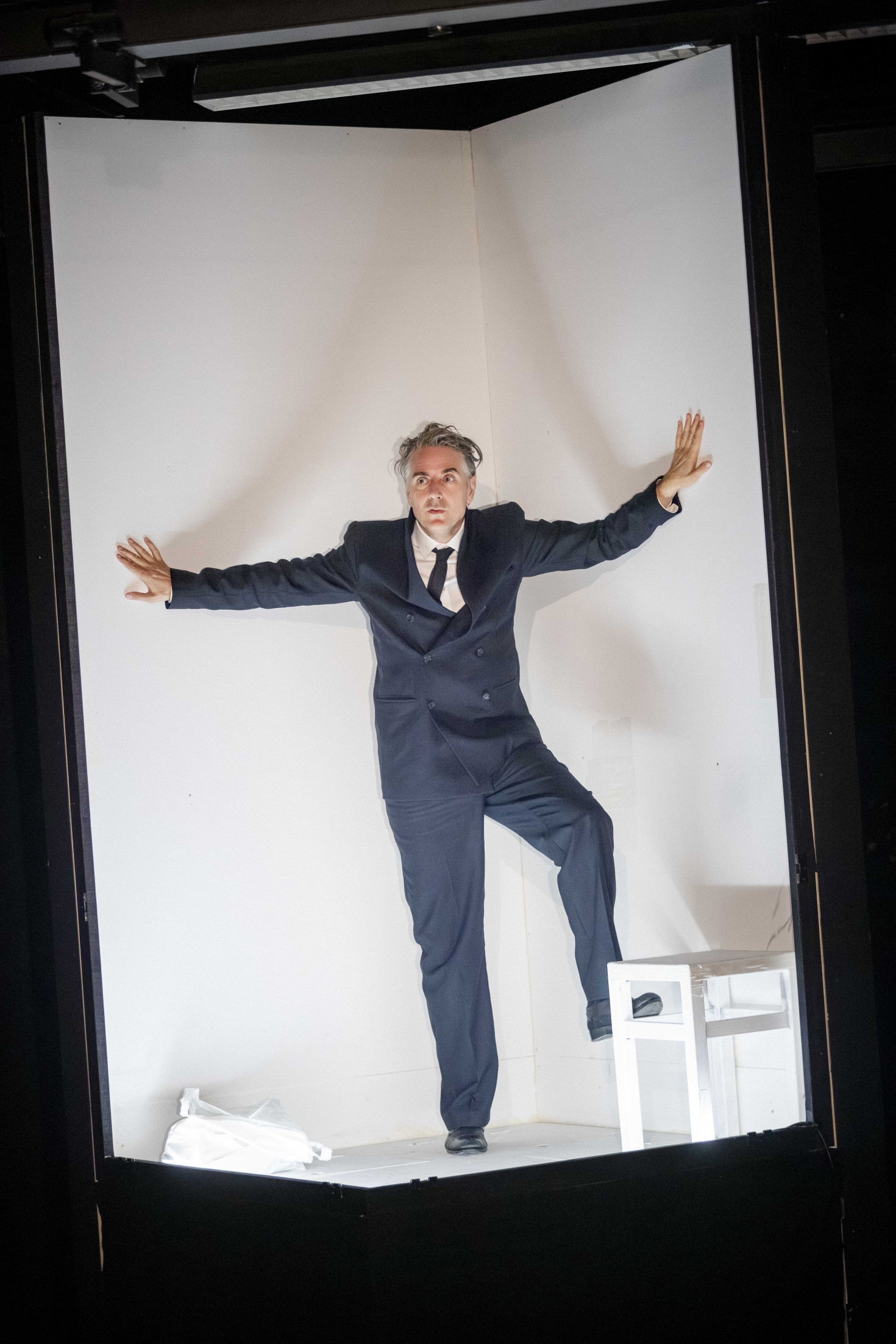
Berliner Ensemble: De Profundis by Oscar Wilde
In summer 2025, as Berliner Ensemble prepared for the world premiere of De Profundis, BE communications intern Falk Scheidl joined director Oliver Reese, Jens Harzer and the creative team in rehearsals. Written shortly before the production opened in Berlin, his rehearsal diary offers a glimpse into the making of the work and the process of bringing Oscar Wilde’s extraordinary text to the stage.
Falk Scheidl, Moritz Haase (photos) | 15.07.25
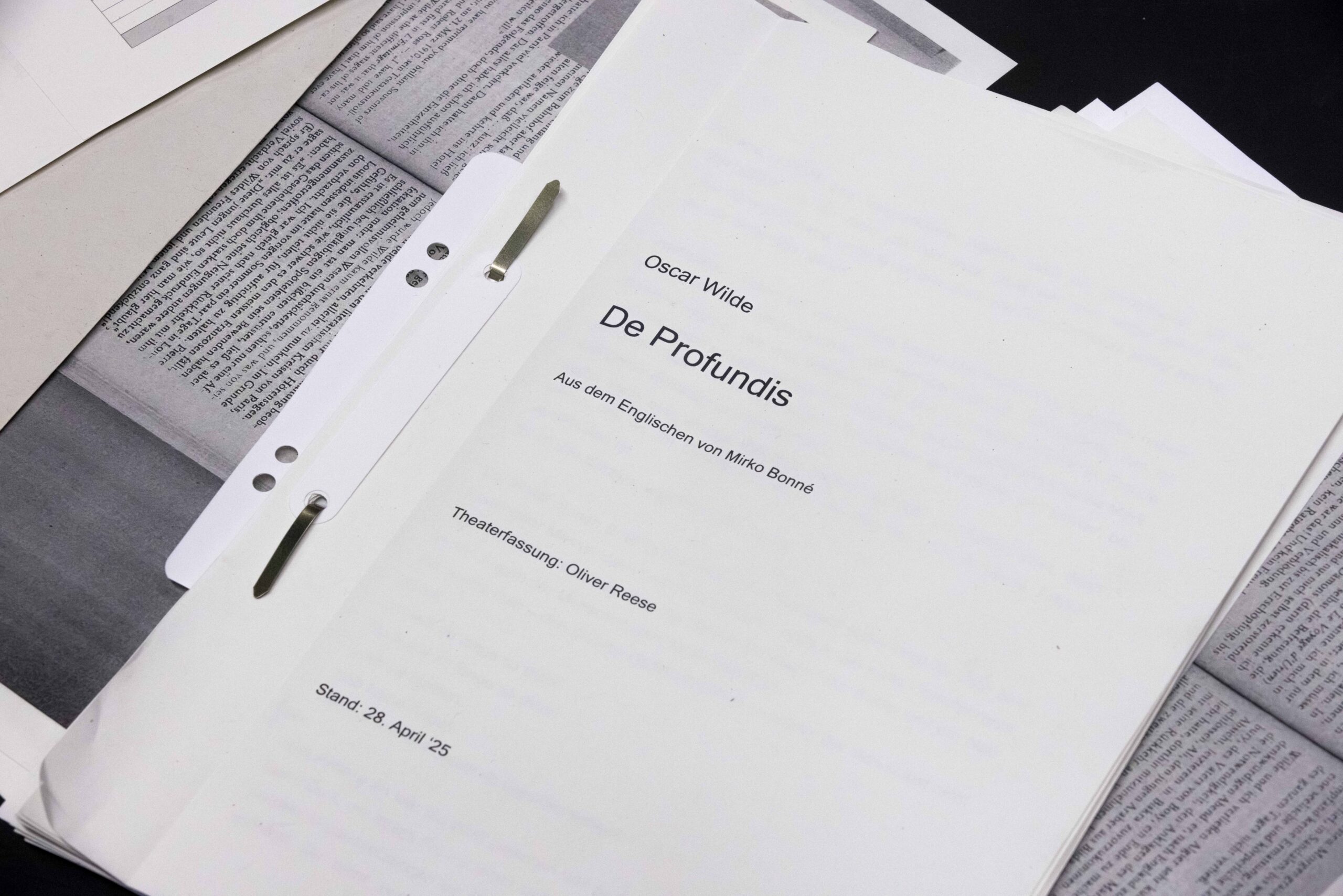
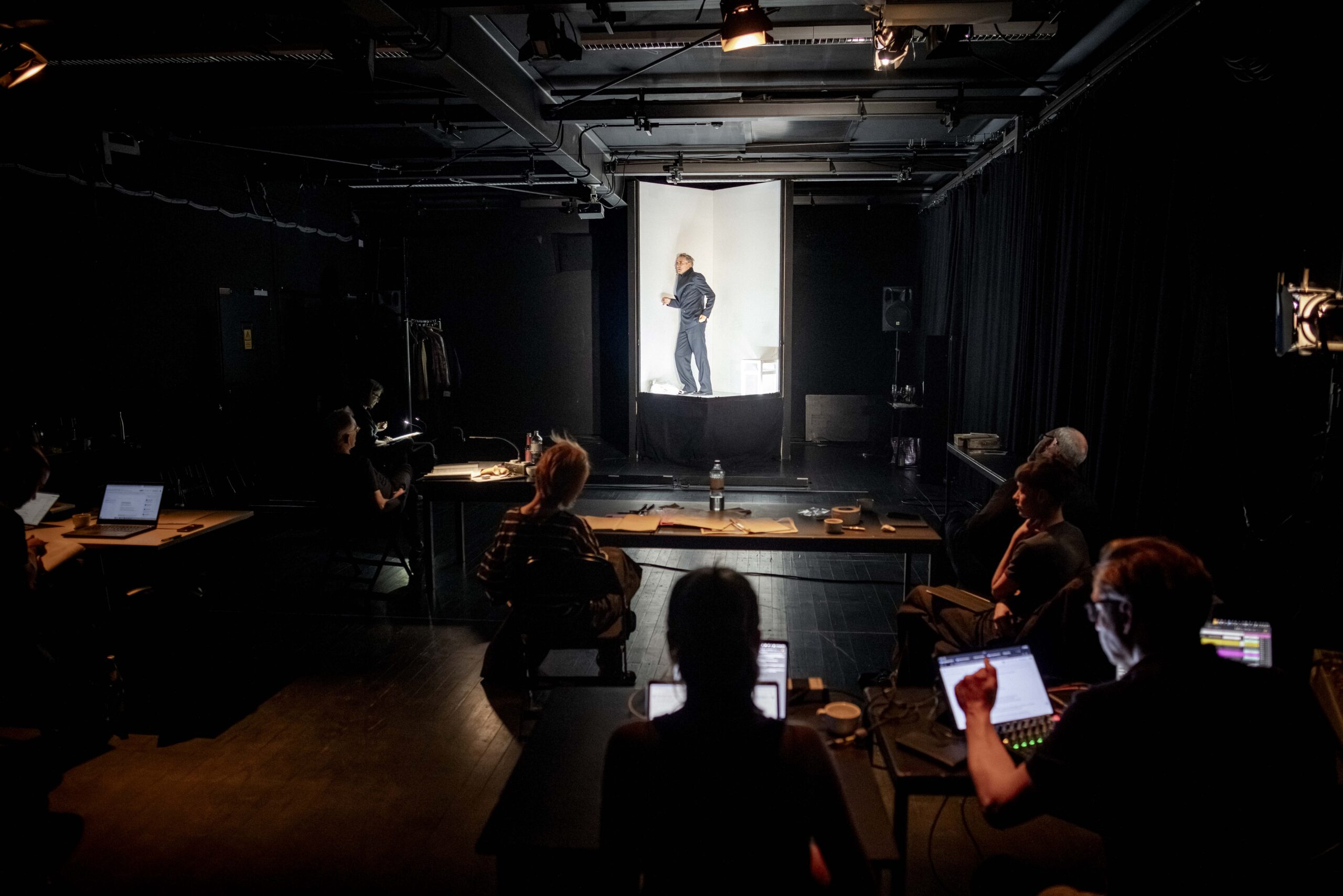
Today’s production is De Profundis. Oliver Reese is directing, and I’m allowed to drop by just before the summer break. “Just a text rehearsal,” I was told, but when I sneak onto the rehearsal stage, the team is preparing as if they’re expecting an audience.
To the left at the back is a double-staffed soundboard (the musical assistant is calibrating precisely), behind it a makeshift dressing room. To the right, a narrow table directly in front of the window (a directing intern is leafing through the current script), in front of it a long table with several laptops open (the rehearsal director is physically manifesting the actor who arrived on the delayed train). I slump down in a chair at the very back and do what I think I can do – I also leaf through the script.
“De Profundis” was written in prison. The monologue is essentially a long letter that Oscar Wilde writes to the reason for his imprisonment—his ex. Lord Alfred Douglas, known as “Bosie,” was an English poet and, until Wilde’s imprisonment in 1895, his public lover. In 50,000 words, he discusses their relationship and the important questions of life: “How do we become who we are?” or “What is guilt?” or “How many months may the man for whom I went to prison take to write his first letter?”
It’s certainly audacious to blame Bosie for the conviction: he, like Wilde, was involved in what was then termed “gross fornication” homosexuality and, according to the law, should have gone to prison just the same (a law that, incidentally, wasn’t partially repealed until 1967). And yet, he isn’t entirely innocent. After all, it was he who persuaded Wilde to accuse his father.
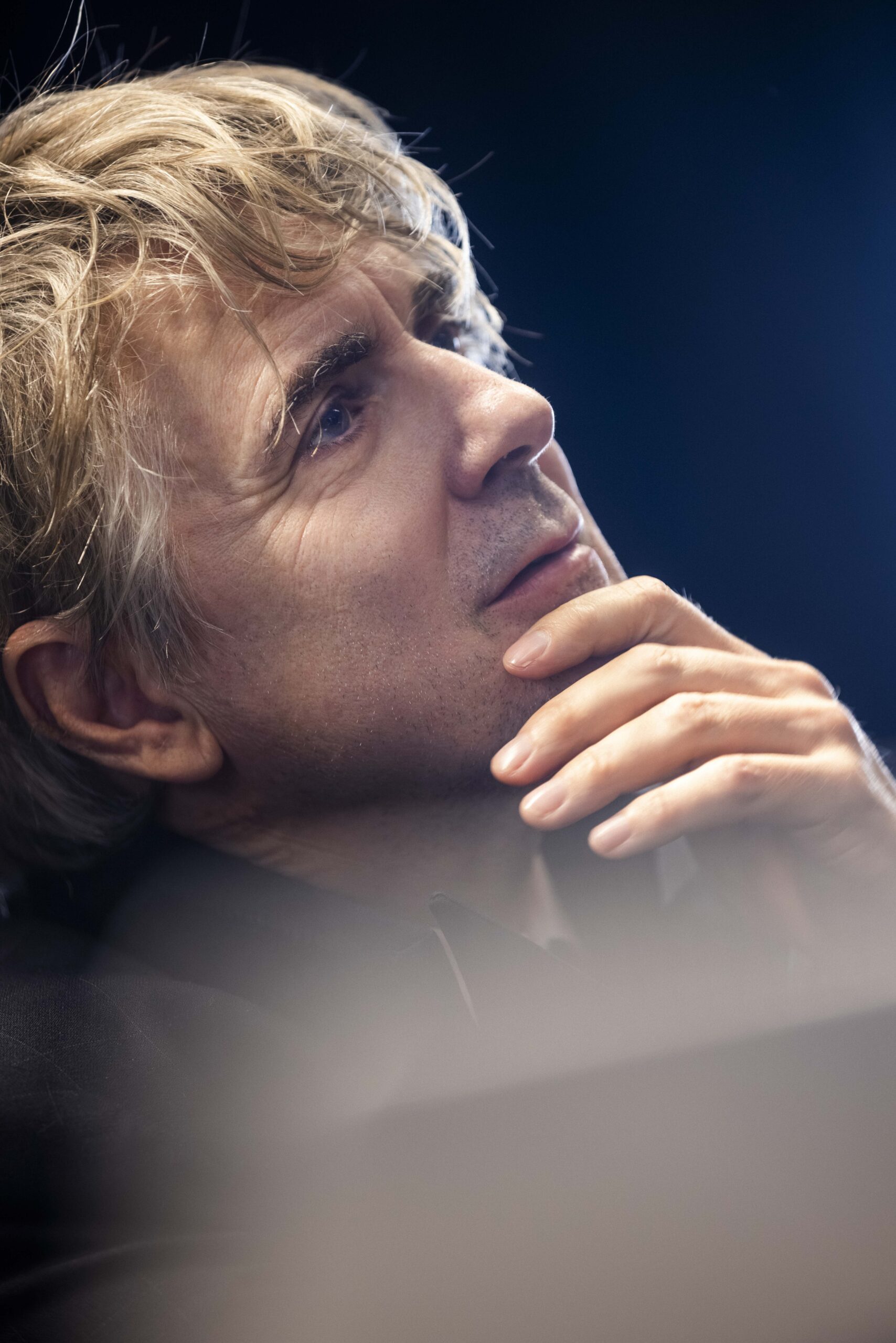
With Jens Harzer’s arrival, the bustling atmosphere transforms into one of aesthetic readiness. The sound is calibrated, the current script is open to the correct page all around, and the actor is now dissecting the German railway system with dry, witty remarks. As he’s about to disappear behind the dressing room, Oliver Reese speaks up: “You don’t need to change for that… We’re just working on the script today.” “Oscar Wilde would have put on his costume for a script rehearsal too,” someone in the group counters, and is proven right the second Jens Harzer emerges from the dressing room. He hasn’t done much more than throw on a slightly wrinkled shirt – yet he seems more present, so the rehearsal costume serves its purpose. The final costume won’t be used until the final dress rehearsal, when costume, make-up and set are all in place.
“Your sole philosophy of life was that someone else has to pay for every action you take,” recites Jens Harzer, the words flowing from him as much as from the prompter’s gestures. She’s already there, of course. Her job isn’t just to be a lifeline, but also to teach him how to swim.
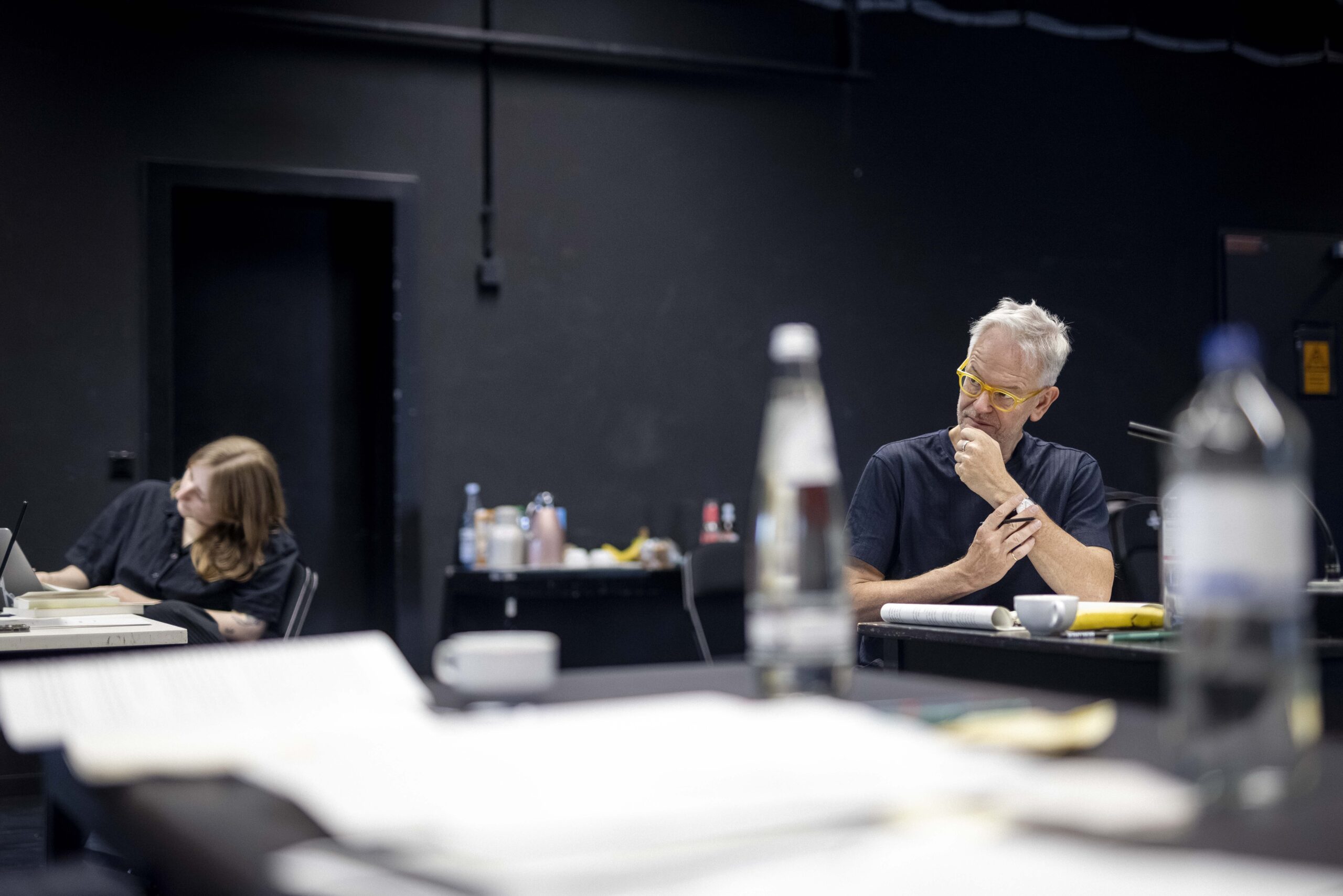
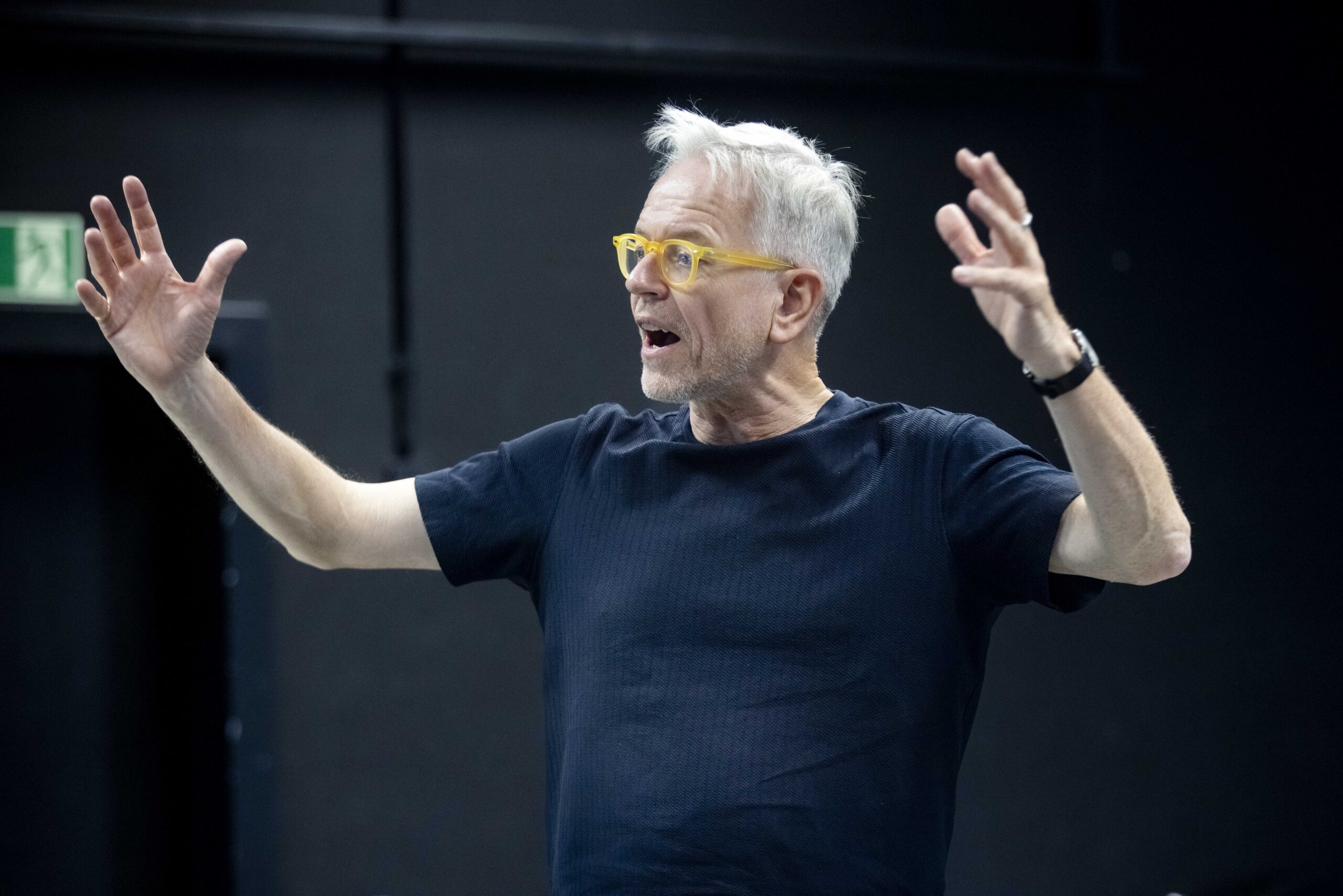
Oliver Reese, who must have read these very lines to himself many times before, follows them with consistent fascination:
“Say it however you want, it sounds good,” he says, looking around the room appraisingly.
“I still had something to paint there.”
“Yes, that sounds better.”
“How are you feeling about it? Or would you like to put it another way? Tell me.”
And so we develop throughout the entire fourth part. Oliver Reese’s direction shapes the space, as does the choral page-turning and bowing, and Jens Harzer’s constant search for something to allude to. Every now and then I’m struck by the line: “Have you ever waited to be invited to dinner?” I almost replied. But it’s completely irrelevant whether Harzer is alluding to a person or to his set design.
The article continues after the images below.
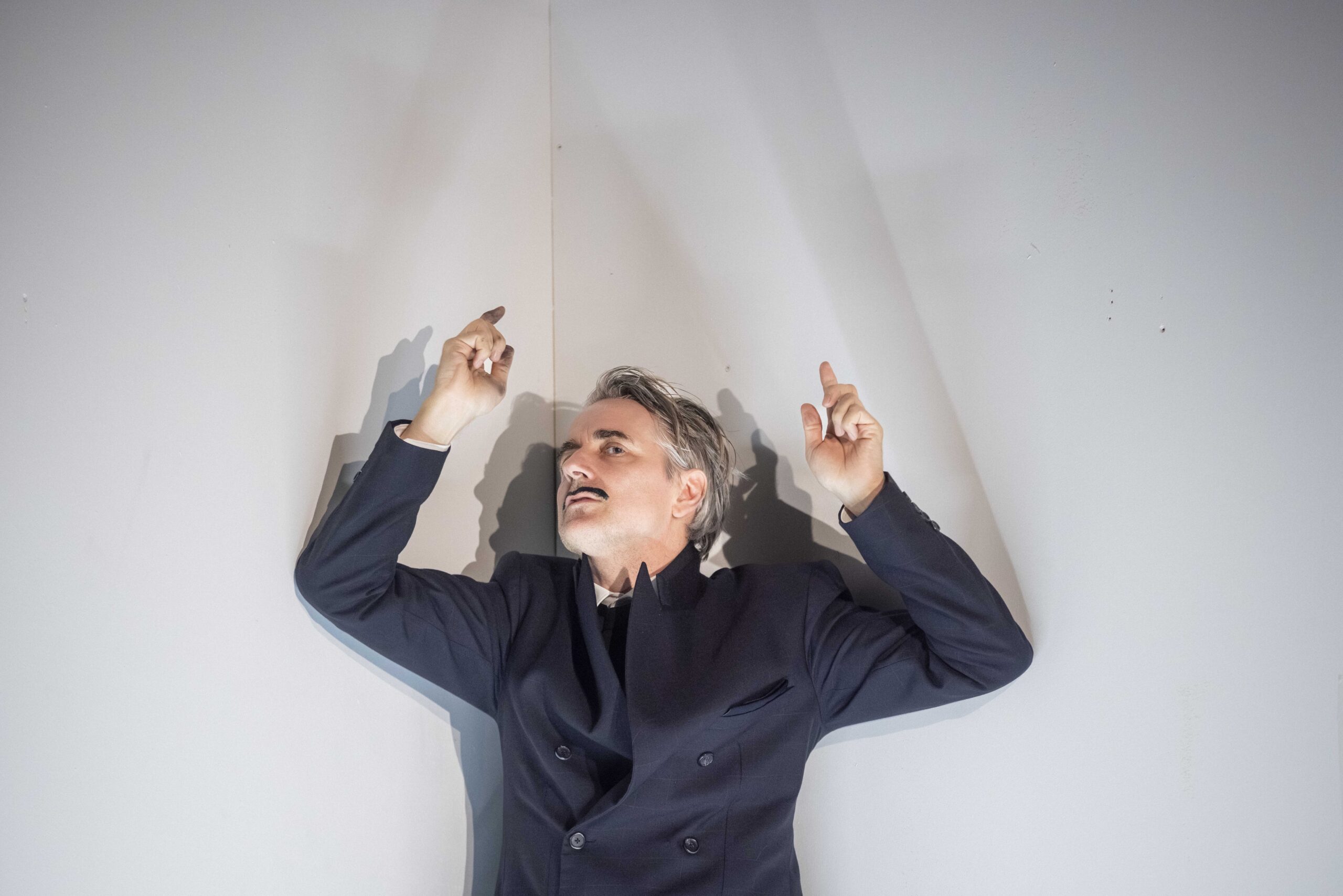
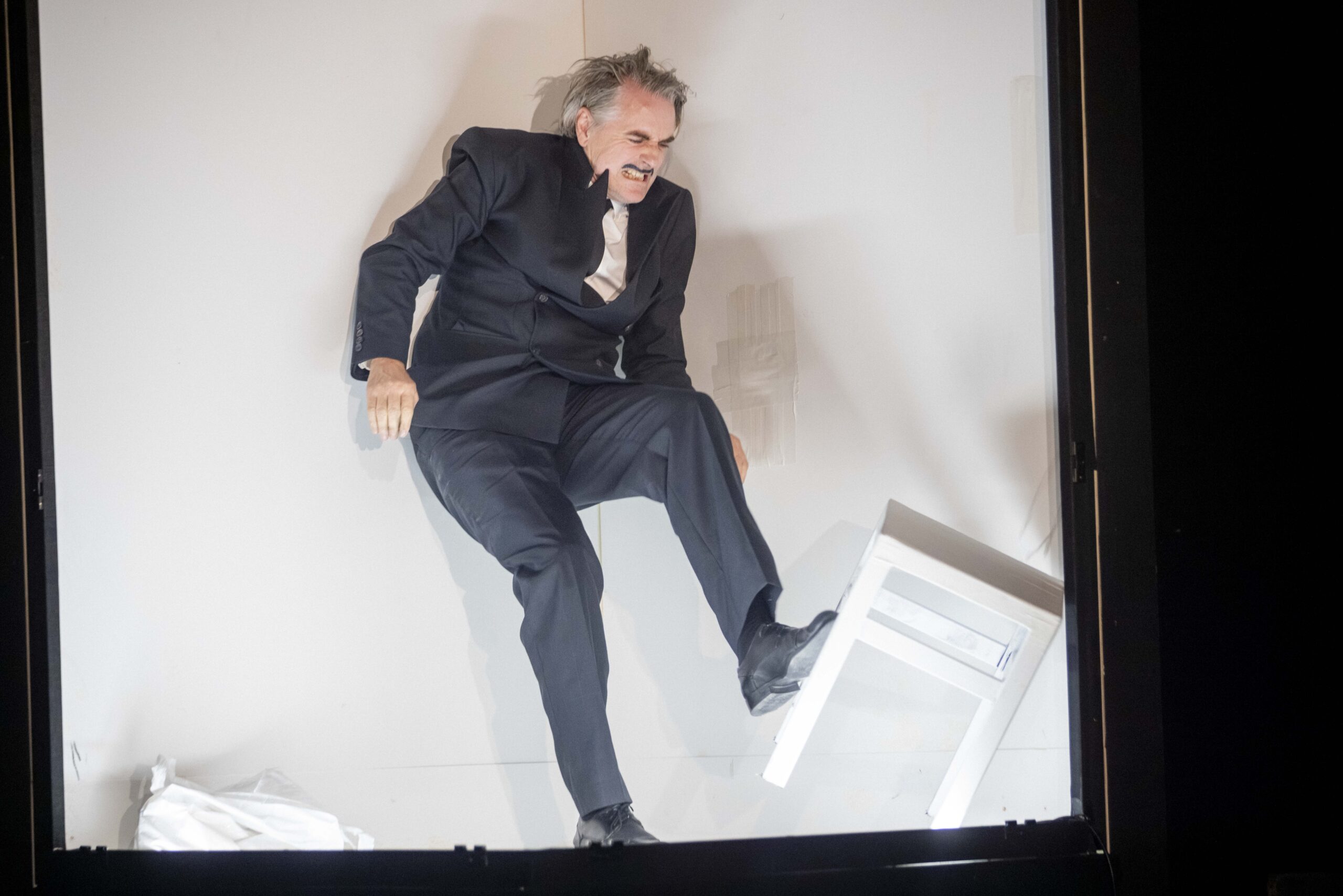
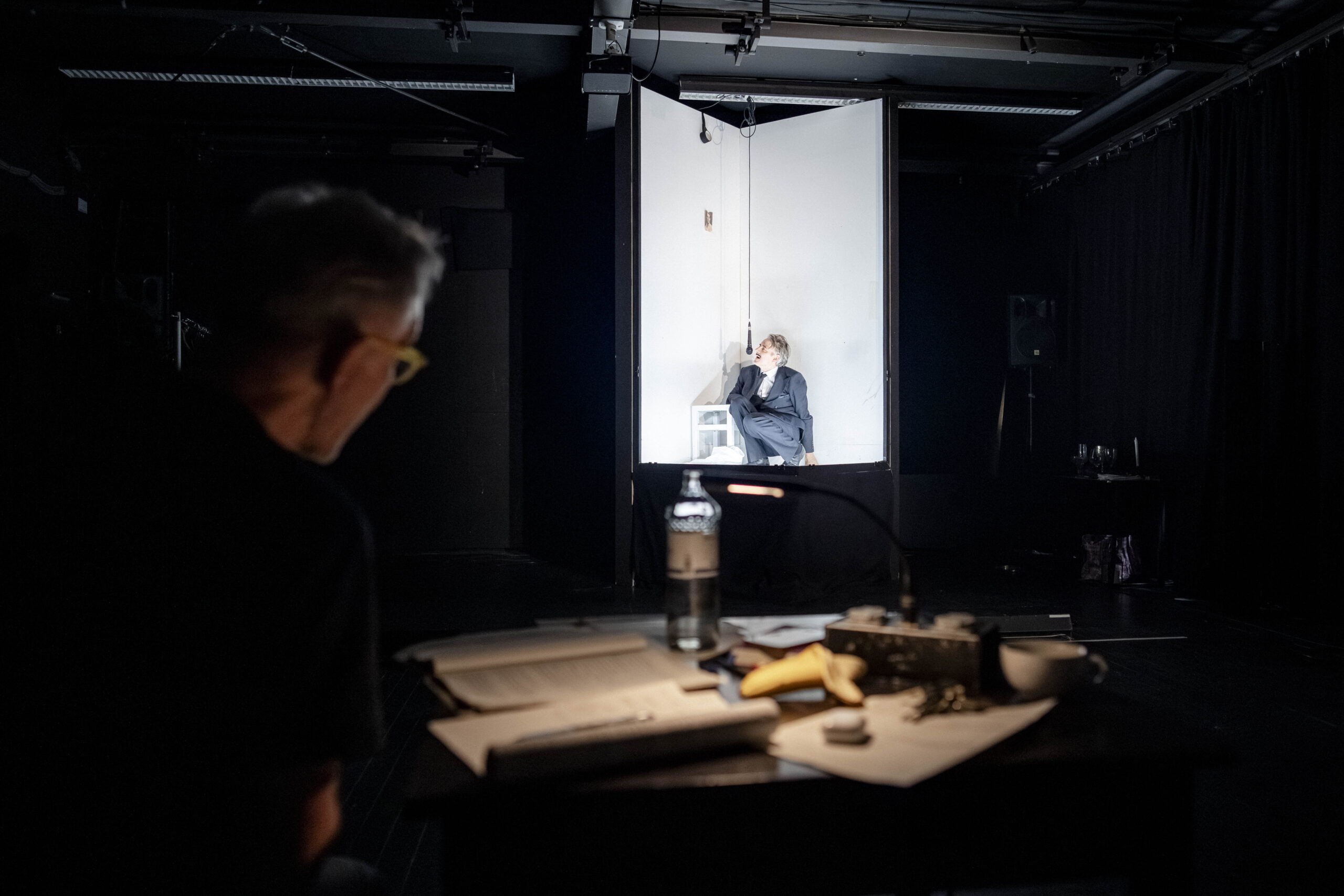
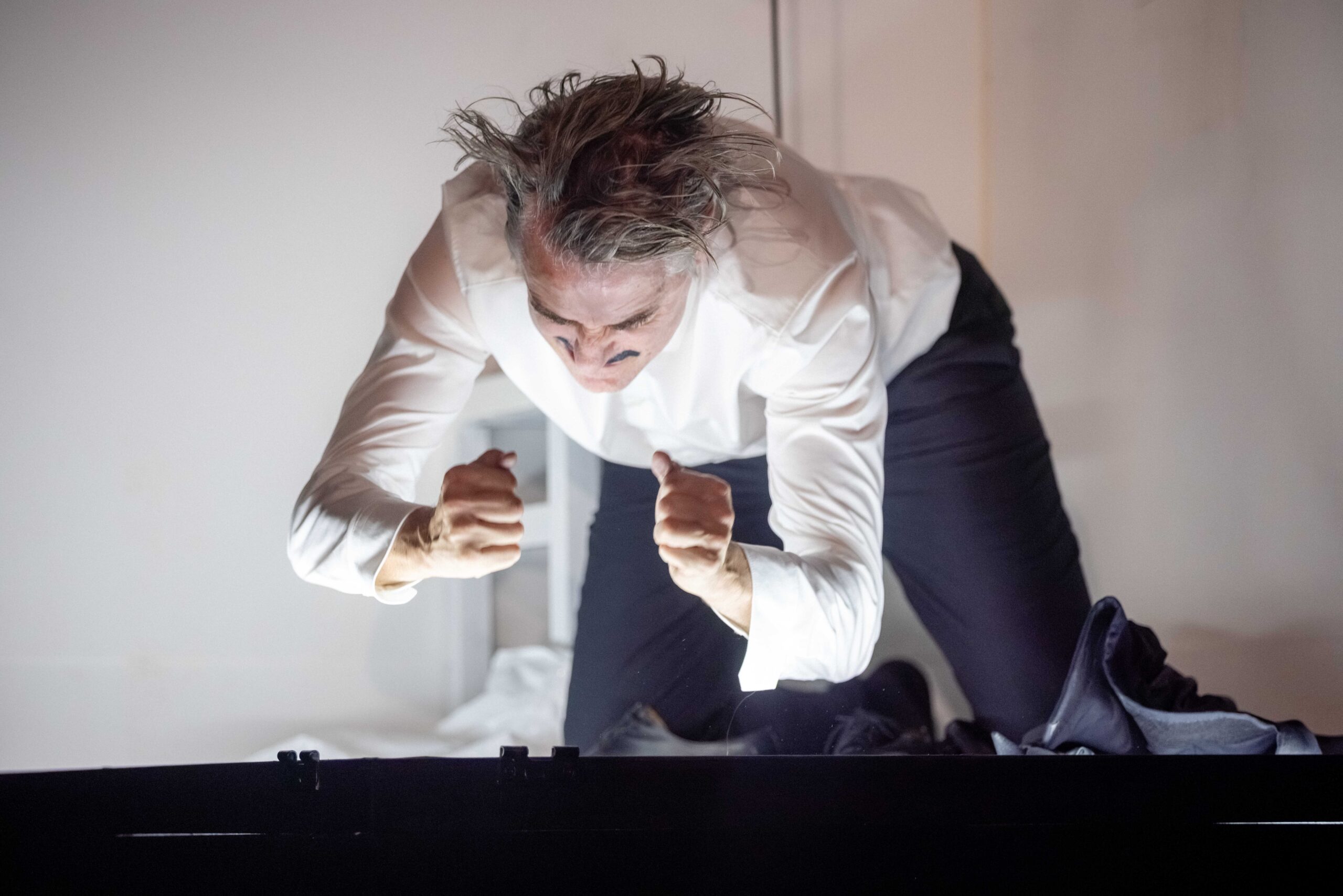
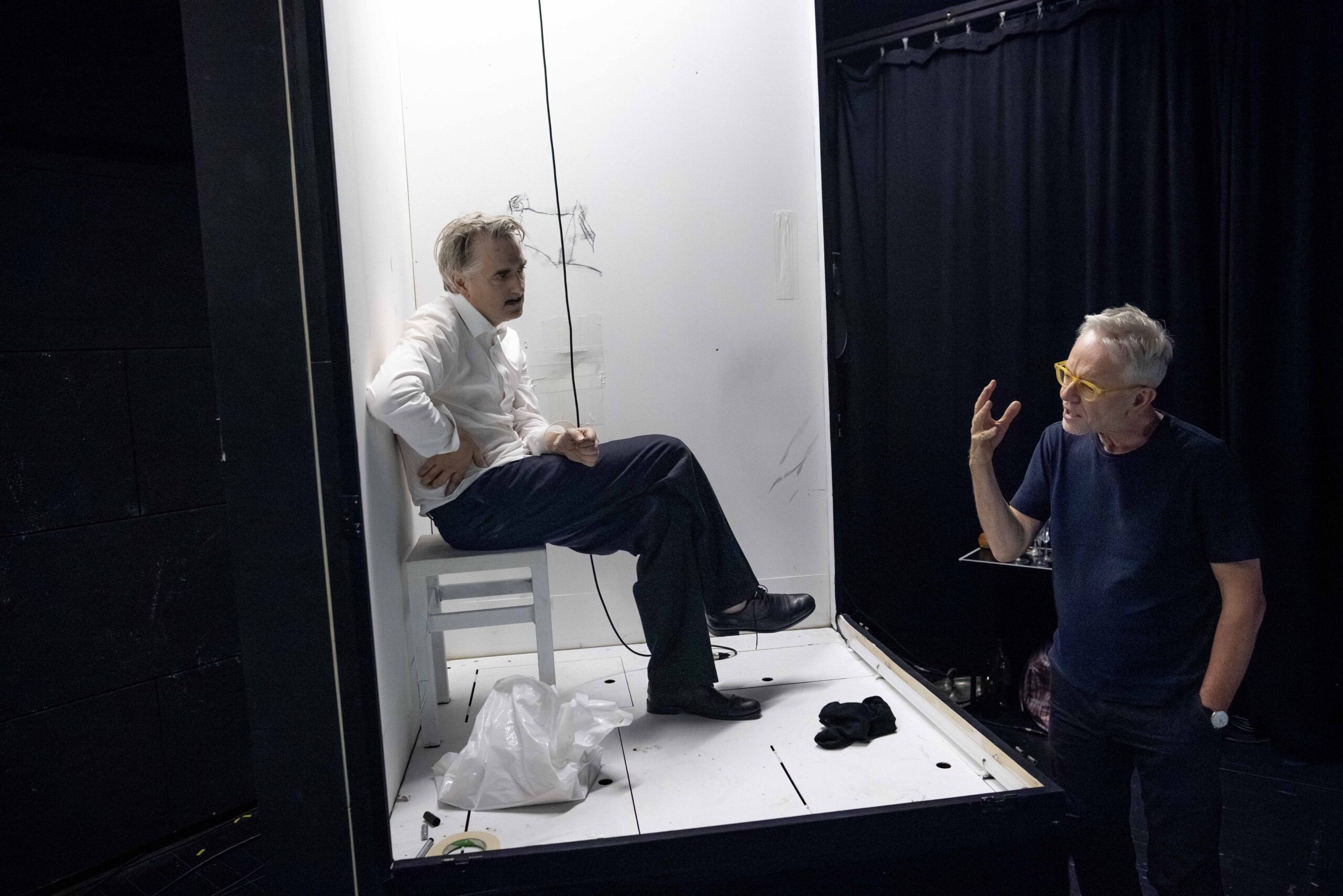
An ensemble piece is about the dynamics between people. The necessary tension jumps from one person to the next with the spoken word, opening up various dimensions. In a solo piece, the focus is solely on the character. It still needs dynamics, though.
Jens Harzer knows how to handle this: He lets his monologue’s vacuum tear at the space until a new fragment erupts, underscoring the final line. Harzer conjures meaning from the depths, without even needing a spectator nodding in concern.