Dostoevsky's Influence on Modern Japan
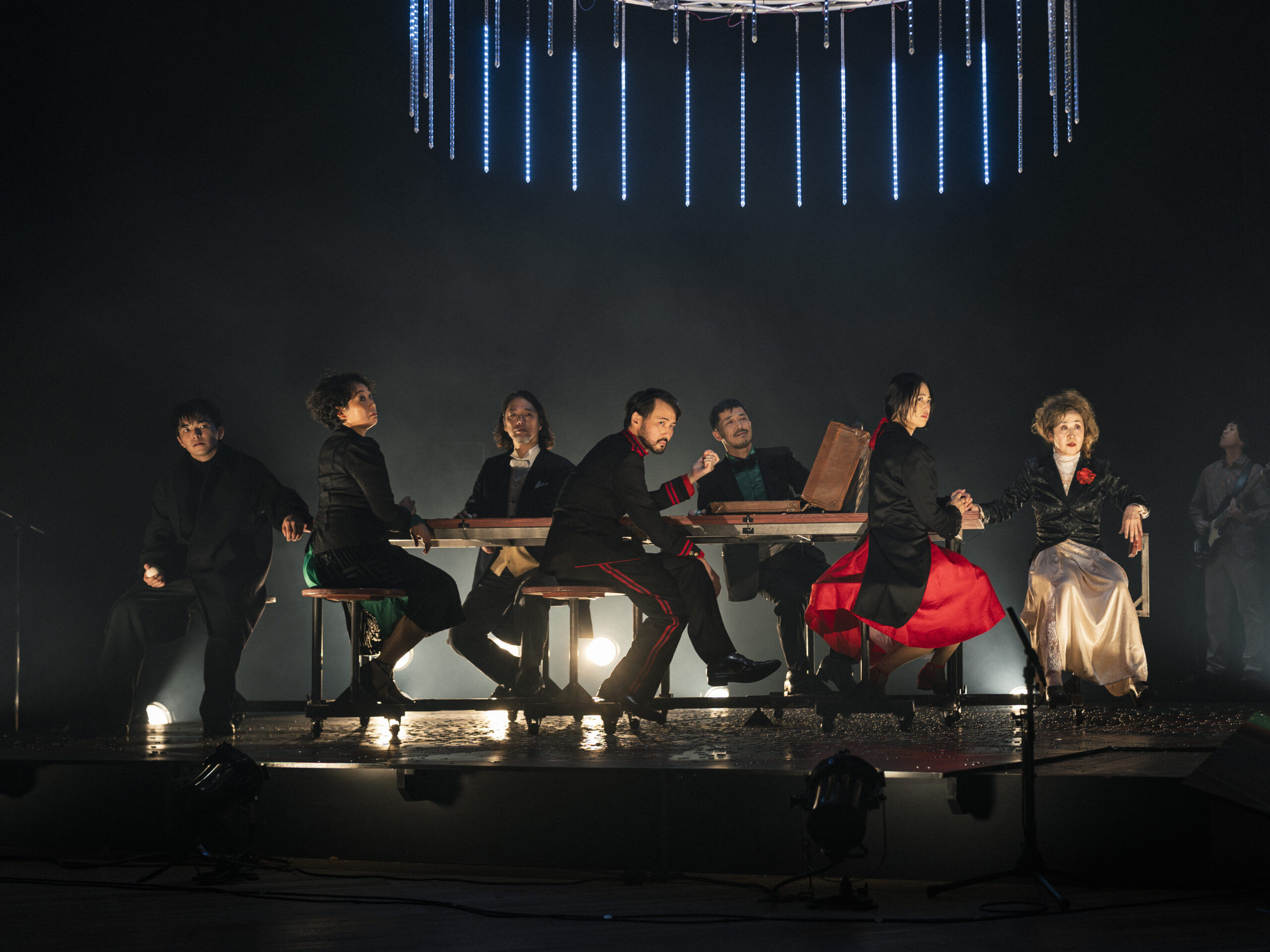
Chiten Theatre: The Gambler
By Santiago Campodonico for Japan Nakama
Noise, fracture, and moral tension collide as a nineteenth-century Russian novel resurfaces inside Japan’s long, uneasy conversation with modernity.
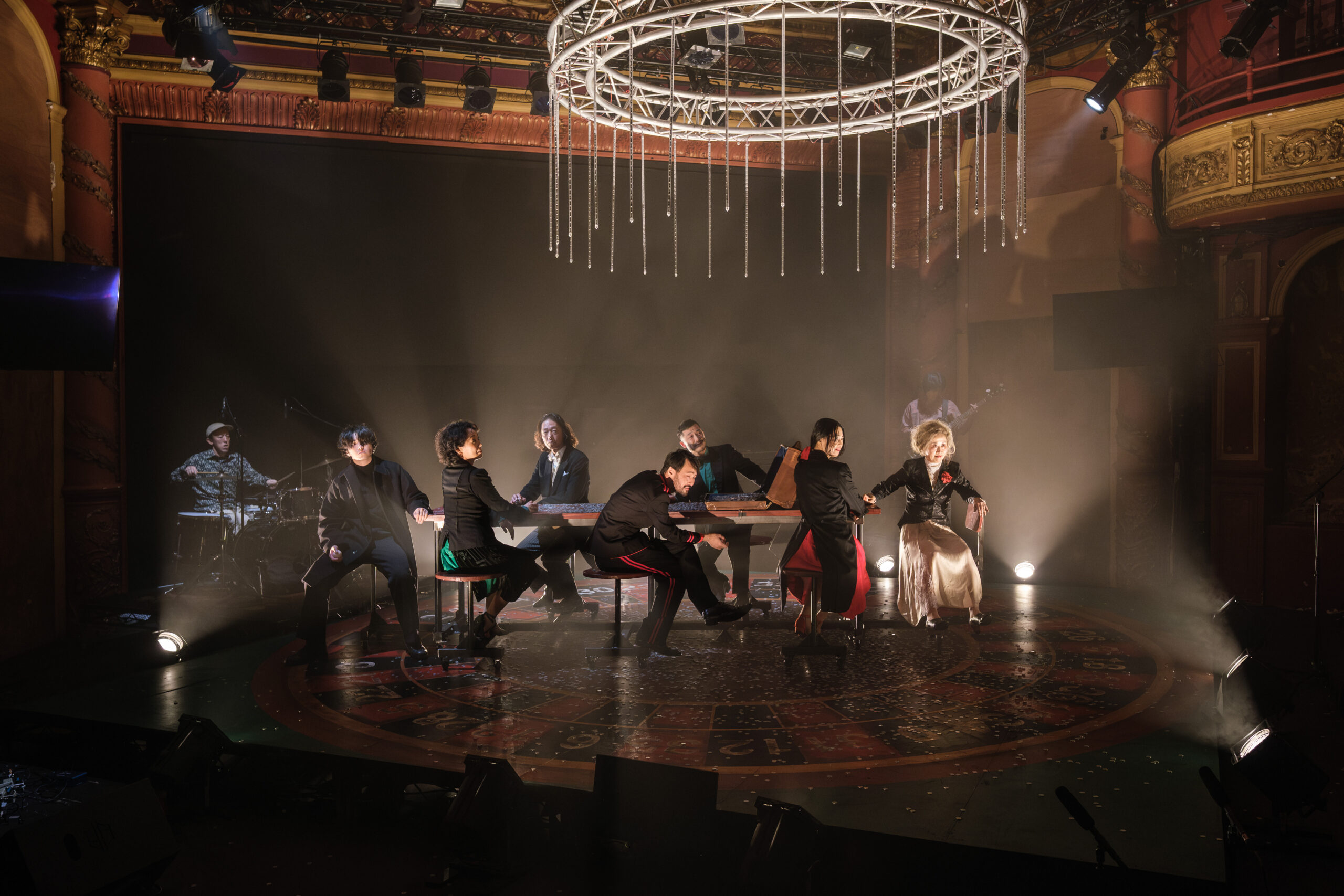
While it is still dark, you hear it. It’s sharp, rhythmic and focused. It’s drums, bass, and fragmented sentences uttered from a barely visible Japanese actor’s mouth. While your eyes may trick you, your other senses are fully aware of what’s happening: the show has begun. As lights brighten and English surtitles appear in your line of sight, another voice overlaps them, then another, then another, creating an intentionally blurry image that only makes sense if you’re there to experience it. And all of this is compounded as the experimental rock trio, Kukangendai (空間現代 ), plays in service of this raw momentum. This is the opening sequence of Chiten’s The Gambler, adapting Fyodor Dostoevsky’s classic novel of the same name.
Directed by Motoi Miura (三浦基), this isn’t the first time the Kyoto-based experimental theatre company has delved into literature. Their adaptation of Osamu Dazai’s GOOD-BYE, for example, was shown in the Coronet Theatre in 2024 to great commercial and critical success. However, a question remains: why Dostoevsky? While it may seem trivial, a deeper look at Japan’s history reveals there is more than meets the eye with this particular choice.
The Russian author was hugely influential in Japan’s transition into the modern world, leaving an imprint in Japanese modern culture that is visible to this day. From Bunmei-kaika (文明開化) in the Meiji era to Ryūnosuke Akutagawa (芥川龍之介) and Osamu Dazai (太宰治), Dostoevsky shaped how Japanese artists pictured modern life. Chiten’s production is not merely an adaptation of one of literature’s greatest novels, it’s part of an ongoing dialogue with one of Japan’s most influential figures of modernity. Here’s the story, the key thinkers and where to see this legacy on stage.
Dostoevsky’s Japanese Soul
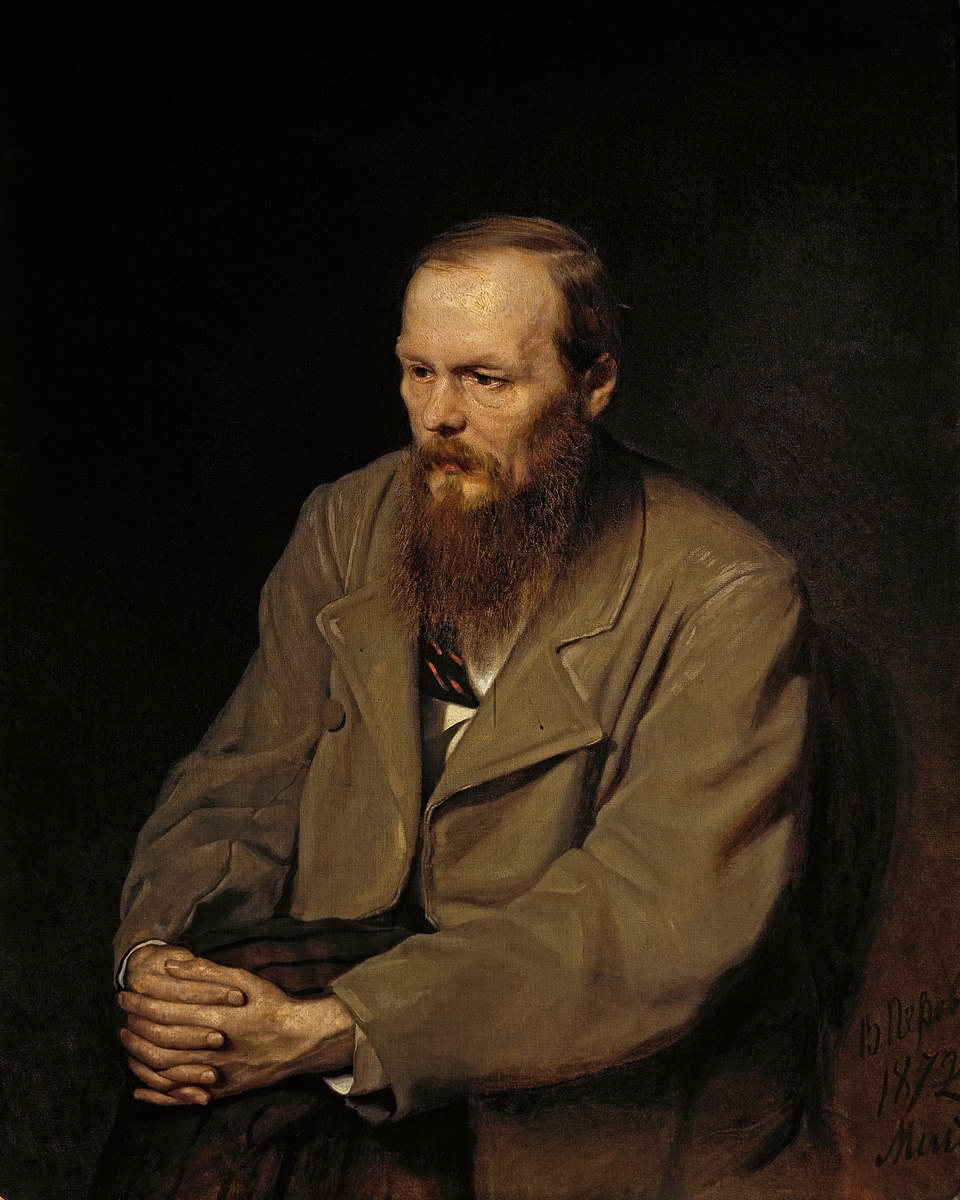
To understand why the Chiten Theatre company is mixing Dostoevsky with math-rock in 2026, we must travel back to the late 1800s, to the Meiji Era (1868–1912). This is where the celebrated Russian author’s work was first translated to Japanese, with the earliest known example being Crime and Punishment, translated from English to Japanese by Uchida Roan in 1892.
Upon arriving, Dostoevsky’s work wasn’t seen as a distant, foreign relic. Rather, his writing was quickly recognized as a toolkit for navigating the modern world. A world that Japan, at the time, suddenly and abruptly found itself in. Something about Dostoevsky’s style perfectly fitted Japan’s unique modernity, and to understand it, a little context is required.
The Meiji Era: Japan’s entry into the Modern World
The Meiji Era (also known as the Meiji Restoration), is a time period we have covered at length here in Japan Nakama. We highly encourage you to read our articles fully dedicated to the subject to understand the importance of this period in creating the Japan we know today. For a quick summary, the Meiji Era was marked by the opening of Japanese borders, which at the time were closed for over 200 years.
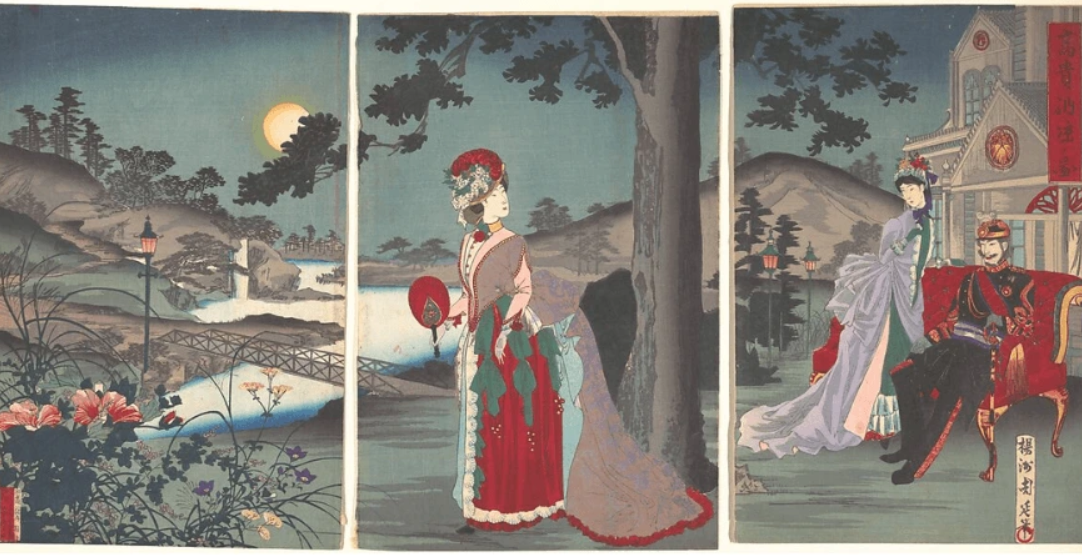
This newly opened Japan felt the need not only to industrialize, but to modernize itself. Indeed, the appearance of railroads and boulevards was followed by a new wave of taste, where a more Western Japan was seen as the desirable outcome. Under the banner of “Civilization and Enlightenment” (Bunmei-kaika, 文明開化), the Meiji era government promoted western trends such as their architectural style, clothing, and literature, leading to the phenomenon of Westernization.
Over time, Westernization gave rise to a new generation of tastemakers (cultural critics and writers), who championed a selective blend of Western and Japanese influences in art. While these figures aren’t exempt from criticism (some critics have argued they were instrumental in Japan’s later shift towards fascism), their influence was undeniable. And in the midst of this cultural upheaval comes Dostoevsky: the writer Japanese authors wanted to emulate and critics adored, backed by a push towards a westernized Japan. But this still isn’t the whole story.
The Saint Petersburg Parallels
Dostoevsky wasn’t the only prolific and celebrated modern author to receive Japanese translations during the Meiji Era. Just to name his Russian contemporaries, Leo Tolstoy and Anton Chekhov were also widely read during this time period. However, their later influence on Japanese writers is less pronounced than that of Dostoevsky. So, why did Dostoevsky resonate with the Japanese public of the time?
A possible explanation can be found in philosopher Marshall Berman’s seminal work on modernity, All That Is Solid Melts Into Air (1982). In this book, Berman sets the goal of defining modernity, analysing how various cultural and social shifts in society informed the art of the time. In his chapter on Saint Petersburg, he argues that the city’s forced development, going from a swamp to the capital of the country, brought forth a specific kind of psychological friction that can be seen in their literature. A friction that, crucially, Berman believed could be useful in understanding the psyche of societies forcibly developing in a developed world (Berman, 1982, p. 176). And, of course, Saint Petersburg’s greatest writer was Fyodor Dostoevsky.
For a Japan rapidly transitioning from a feudal to a modern society, Dostoevsky’s characters felt eerily familiar. The stories of men torn between traditional morality and ego-driven chaos, resonated deeply with the insecurities of the time. In how Dostoevsky explored Saint Petersburg, Japanese readers saw a reflection of their own nation in flux. Consequently, they saw a path for understanding it, one some of Japan’s best writers would dedicate their lives to exploring.
 Ryunosuke Akutagawa
The Dostoevsky Imprint
Having established Dostoevsky’s unique position in Japanese thought, we can look at some writers he directly inspired:
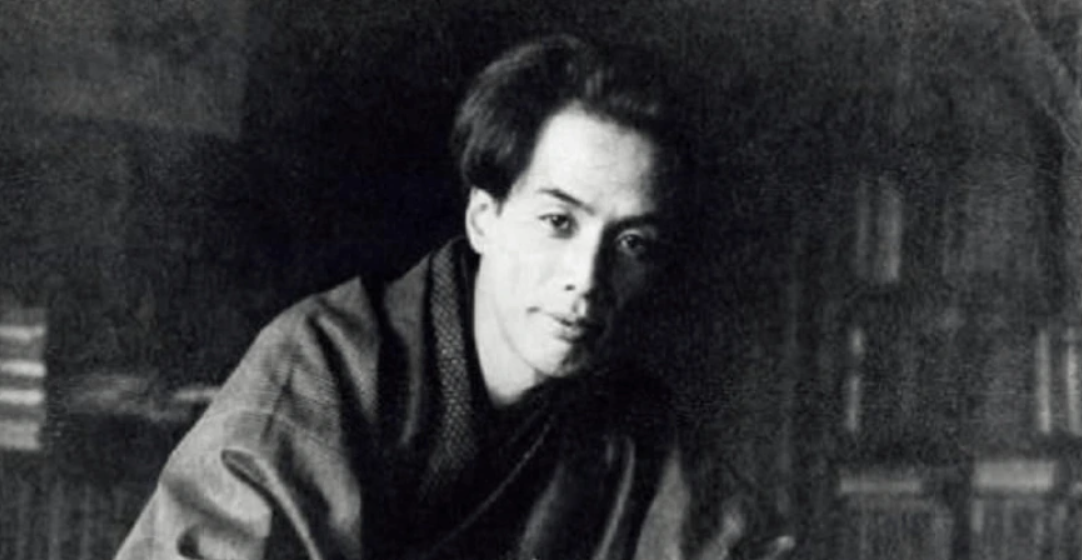
Ryunosuke Akutagawa (芥川 龍之介): Regarded as the father of the Japanese short story, Akutagawa found in Dostoevsky a roadmap for moral ambiguity and psychological fragmentation. His characters are torn between what’s right and what they believe is right, causing a moral tension that eventually escalates into somber melancholy. He explored the struggle between societal duty and internal impulse, which echoes the Dostoevskian struggle to find objective truth in a world of subjective suffering. A great example is his short story In a Grove (藪の中) (1922), which shows character twisting truth to benefit themselves. This story was later adapted to Akira Kurosawa’s Rashomon.
Osamu Dazai (太宰治): One of the most celebrated writers of the Buraiha generation, Dazai found in Dostoevsky the tales of man that search for happiness where they know they won’t find it. He explored, both in flesh and fiction, how the tension between social goals and the path to achieve them can lead to self-destructive behavior. Just like Dostoevsky’s “Gambler” or the “underground man”, Dazai believed some beauty might come from exploring the ugly undertones of the human psyche. A novel of his that perfectly captures this is The Setting Sun (Shayō – 斜陽), where exploring the bohemian life of postwar Japan is seen a rebellious act in creating a new moral compass.
Oda Sakunosuke (織田 作之助): Another key Buraiha figure, Oda found in Dostoevsky the language to describe the precarious lives of those in the periphery. He championed the anti-hero: the cleaners, the geishas, and the horse gamblers who lived in the shadows of a developing Osaka. Oda used Dostoevsky’s fractured, sober prose as a lens to give shape to the “nobody” characters that society preferred to ignore. For our preferred example, his story Ad Balloon (アドバルーン) masterfully captures the precarious life in a developing world and how it can be turned into spectacle.
These are some of the writers that left a permanent mark in Japanese literature, leaving the Dostoevsky imprint visible for anyone who dared to open dialogue with it. And this is where the Chiten Theatre company comes in.
Chiten’s The Gambler
With writers like Dazai and Akutagawa, a Japanese path towards modernity was forged, and it involved a deep exploration of the fragmented soul. Similar to Berman’s proposed thesis on modernity, these writers spoke of characters consistently shattering and re-emerging anew, only to do it again, and again, and again. It’s an endless cycle, one that rejects stagnation, constantly progressing, taking some parts of the past and leaving others behind. A cycle so volatile is disquieting; there’s no guarantee the path forwards is the right one, only that it is a path towards something different. The Chiten Theatre company wanted to give this sensation shape and voice, and to do it they travelled back to one of the novels at the root of it.
Chiten’s The Gambler functions as a meditation on Japan’s modernity, not merely a stage adaptation of a Russian classic. It looks back at Dostoevsky’s novel, but it does so presenting itself under the mantle of the things that came after. It takes the core ideas of the text, and explores them using contemporary and unique methods.
Now, let’s explore some of them:
Polyphony and Fracture
Fyodor Dostoevsky’s The Gambler was famously written in the span of only 30 days. A gambler himself, the Russian author was struggling to pay off his debts and he ended up betting it all on the novel being finished. A bet he ended up winning. Rather than a curious fact about the novel, this is a core feature of it. While the novel’s prose doesn’t feel rushed, the narrative does convey the crushing pressure of time closing in. A great example of this is how the dialogue is polyphonic. This is to say, the characters’ voices overlap, interrupt one another, and often obscure who is speaking. Debt is creeping in, time is running out, and people are whispering, gossiping, making everything indiscernible.
Chiten, for their part, aims to capture on stage the pressure created by this polyphony, treating dialogue as a collage. Voices in the play don’t just interrupt each other, they pile up on the spectator’s head like footnotes, like debt, making the experience intellectually taxing. Actors are given little time before their lines are interrupted, and what remains are incomplete fragments one must put together. From the outside looking in, it is like hearing a mind pull itself apart while simultaneously trying to pick up the pieces. Making the fragmented image make sense, however, is a reward worth the time invested.
Time and Tension
While the original novel is by no means one of Dostoevsky’s longest works, being a moderate 240 pages in most paperback editions, it’s still a very expansive story. It covers the emotional turmoil and relentless gambling in the fictional German town of Roulettenburg, in a narrative that unfolds over weeks, if not months. The exact time frame isn’t clear, and this, like the polyphony, works to the book’s benefit. Time itself blurs as the frantic and dangerous thrill of gambling sets in, making the story longer on scenes that take literal seconds. As long as the roulette is spinning, time is effectively non-existent.
Translating this into the theatrical stage is a difficult task, and one that will undoubtedly vary depending on the adaptation. Chiten’s approach is quite unique in this regard, stripping the story down to a 75-minute sprint with no intervals. This way, the play focuses on the tunnel vision of the gamblers, making everything that is not directly related to the here and now trivial. For both the character and the viewers, there is no time to catch a breath. It’s one bet after another, delivered in infectiously fast momentum, making the experience of watching it a thrilling prospect.
Sound and Meaning
Finally, it’s time to address what’s perhaps the most instantly striking element about Chiten’s The Gambler: the collaboration with experimental rock trio Kukangendai (空間現代 ). Much like the characters’ collage-like dialogue and the uninterrupted momentum of the play, the inclusion of this rock outfit serves a purpose, although is not immediately noticeable. Unlike the previous examples, which are directly responsive to Dostoevsky’s original novel, the music in the play seeks to open a dialogue with Dostoevsky’s imprint.
As we’ve discussed, Dostoevsky’s influence was widespread in Japan, with many twentieth-century Japanese writers leaving traces that lead to the Russian author. The presence is there, although it’s hard to express with words alone. However, with music, it’s another story. The inherently abstract yet universally suggestive meaning behind musical notes can provide an outline, one that can be filled with an actor’s body.
Indeed, the music of Kukangendai is there not as a background element, but to serve a role similar to a director. The feelings a scene is supposed to convey enter one’s ear first, and then the actors fill in the gaps with their dialogue and movement. This way, the play is constantly asking the viewers to interpret scenes and what’s beyond the surface level. Moreover, it does it in a way that is inherently modern, taking what worked with Dostoevsky for Japanese people and adding something completely new.
This article was first published in Japan Nakama on 8 Jan 2026