Inside the Technology of Current/y
Chen Yi Studio: Current/y
Book tickets for Chen Yi Studio: Current/y | 17-19 Sep
How motion capture, real-time game technology and meticulous choreography turn a dancer into a digital double.
In Current/y, dancer Livier Tu moves across the stage while another version of her body moves through a digital world. Connected through motion capture technology, performer and avatar move together in real time, blurring the boundary between the physical and virtual.
The result is a digital double that moves with the performer in real time. The more complicated task, however, was working out how one live body could exist alongside an entire virtual cast.
From body to avatar
Motion capture is often associated with film production: an actor performs in a studio, their movements are recorded, and those recordings eventually become the movements of a digital character. Current/y brings part of this process onto the stage.
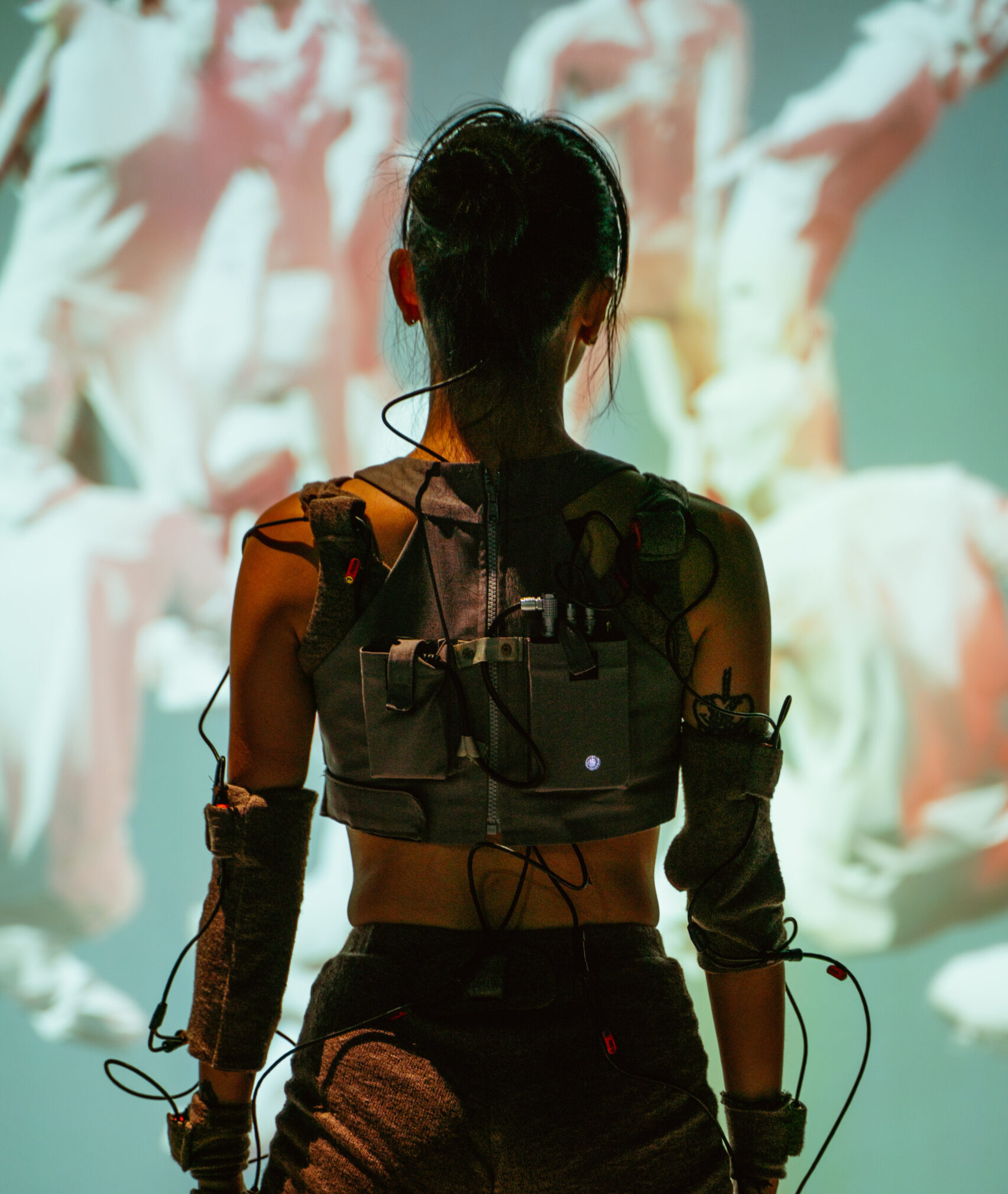
Livier Tu wears an Xsens MVN Link suit beneath a costume created specifically to accommodate its sensors. As they move, the system captures motion data and sends it into Unreal Engine using Xsens Live Link. Rather than waiting for Tu’s movement to be processed later, the digital character can respond as the performance happens.
The physical and virtual bodies are therefore connected, but they inhabit very different spaces. One exists in front of the audience; the other inside a digital environment projected around them.
Choreographing sixteen characters
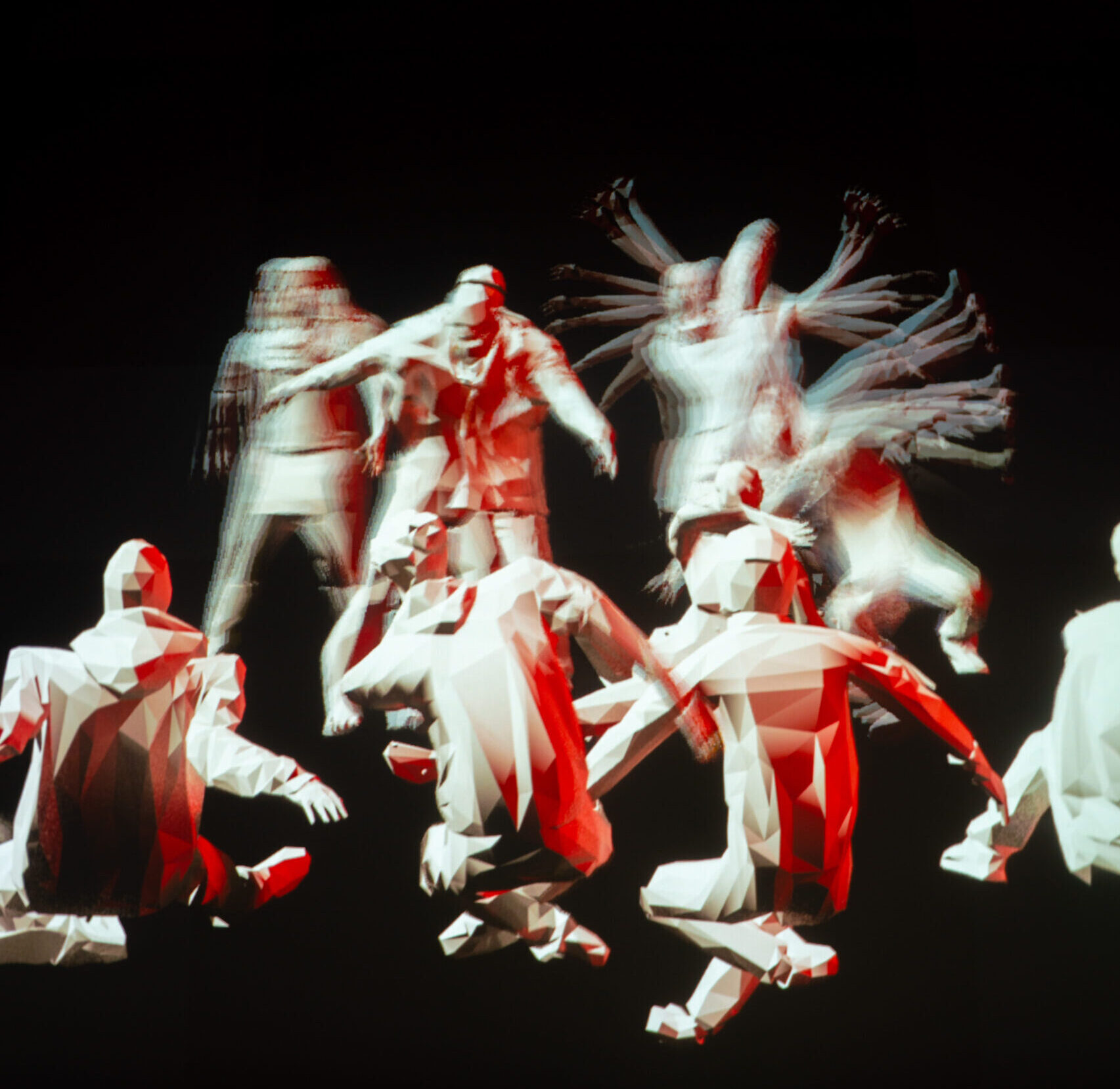
The world of Current/y contains sixteen characters in total: the protagonist’s live-controlled digital double and fifteen additional virtual figures. Creating them presented the company with a practical problem: during production, only two Xsens systems were available.
Rather than capturing an entire digital ensemble simultaneously, the team built it piece by piece, recording two performers at a time before importing their movements into the virtual environment for review. If a movement didn’t work, or an inconsistency became apparent, it had to be recorded again. The choreography and spatial pathways of all fifteen characters therefore had to be precisely planned, anticipating how bodies captured at different moments would eventually interact and come together as a single virtual ensemble.
Performing with something that isn’t there
Once Current/y reaches the stage, the technological challenge becomes a human one. The protagonist’s digital double is generated live, but much of the world surrounding it has already been programmed. The virtual characters can’t see Tu or adjust if she arrives a fraction too early or stands slightly further to one side – she has to adjust to them. To make these interactions appear seamless, Tu relies on an exact memory of timing and position, knowing where a virtual body will be even when there is no physical person standing there.
It creates an unusual form of duet. One performer may be physically alone on stage while simultaneously dancing with a version of themselves and an ensemble of bodies that exist only as data.
Where the virtual meets the real
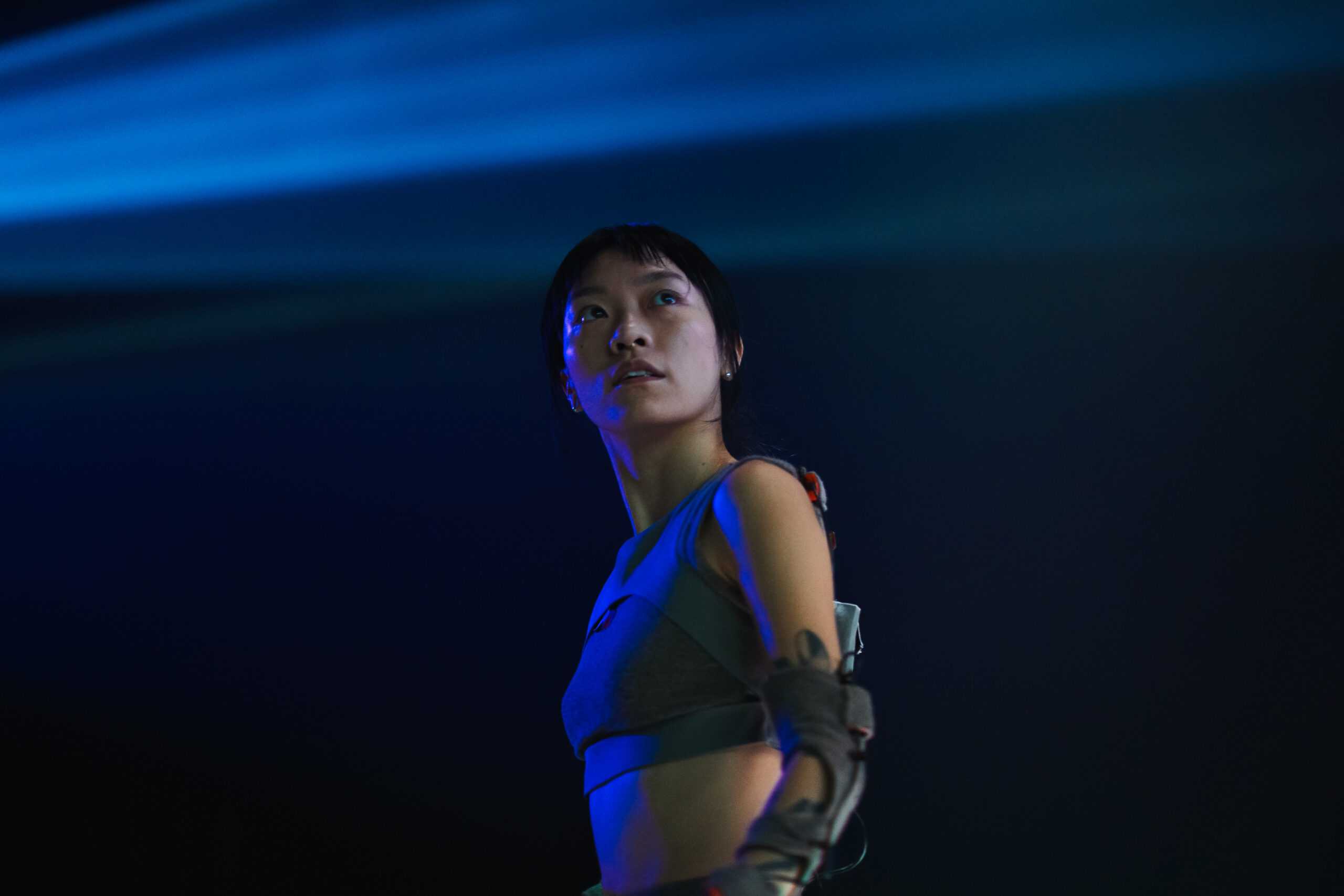
This tension sits at the heart of Current/y. Its technology can reproduce a body, multiply it and place it inside spaces that could never physically exist on stage, yet bringing those worlds together still depends on something strikingly analogue: hours of choreography and repetition, and a performer’s memory, timing and physical precision.
In Current/y, the boundary between performer and avatar becomes increasingly difficult to locate. A movement begins in a human body, becomes data, enters a virtual world and returns to the theatre as an image.
The technology doesn’t replace the performer. It extends the space in which the performance can exist.